

Villa La Rotonda
Architect: Andrea Palladio
Sub-Style: Palladian
Year Completed: 1567-1590s
Size: Unknown
Location: Vicenza, Italy

Villa La Rotonda is a Renaissance villa just outside Vicenza in Northern Italy designed by Italian Renaissance architect Andrea Palladio, and begun in 1567, though not completed until the 1590s. The villa's official name is Villa Almerico Capra Valmarana, but it is also known as "La Rotonda", "Villa Rotonda", "Villa Capra", and "Villa Almerico Capra". The name Capra derives from the Capra brothers, who completed the building after it was ceded to them in 1592. Along with other works by Palladio, the building is conserved as part of the World Heritage Site "City of Vicenza and the Palladian Villas of the Veneto".
In 1565 a priest, Paolo Almerico, on his retirement from the Vatican (as referendario apostolico of Pope Pius IV and afterwards Pius V), returned to his home town of Vicenza in the Venetian countryside and built a country house. This house, later known as 'La Rotonda', was to be one of Palladio's best-known legacies to the architectural world. Villa Capra may have inspired a thousand subsequent buildings, but the villa was itself inspired by the Pantheon in Rome.
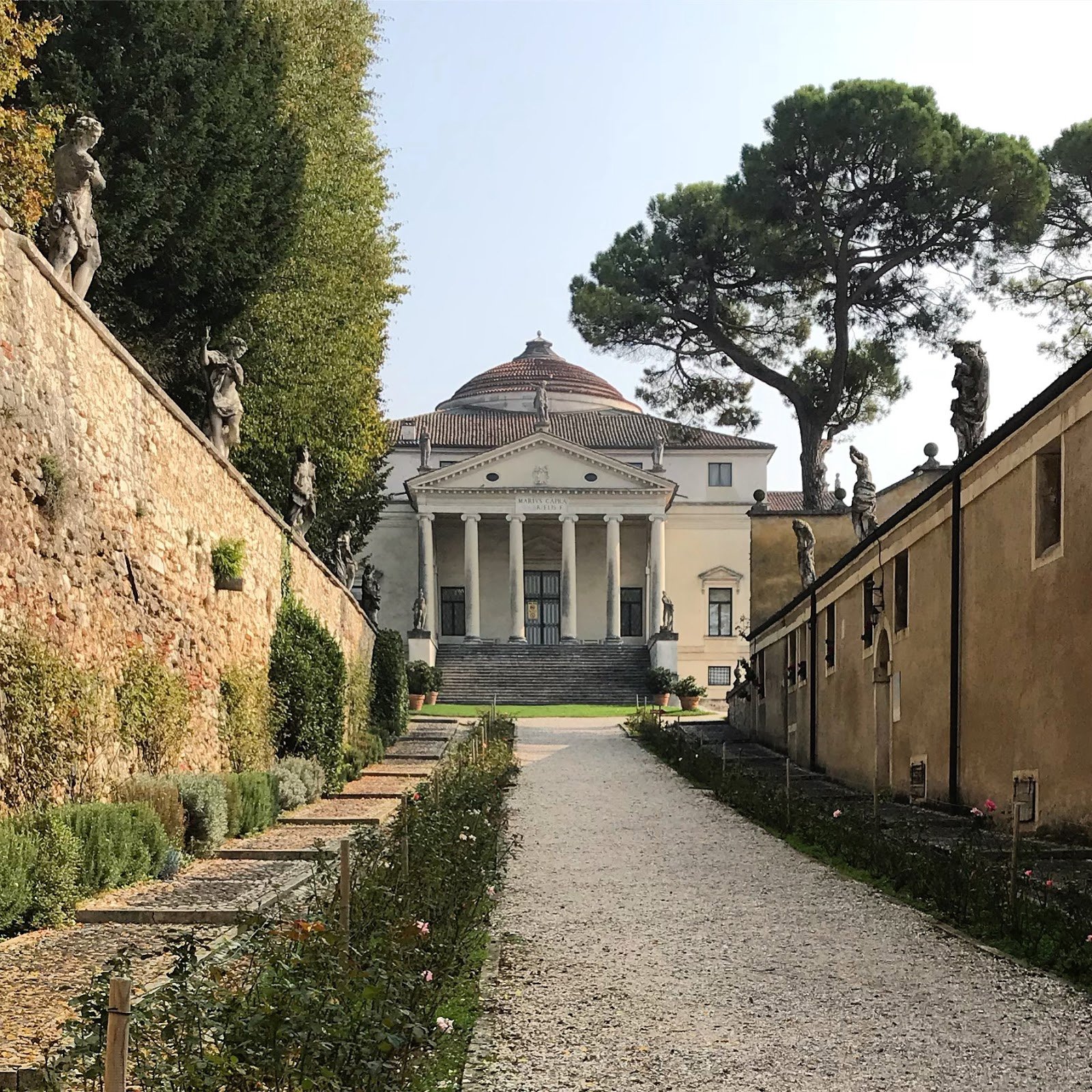
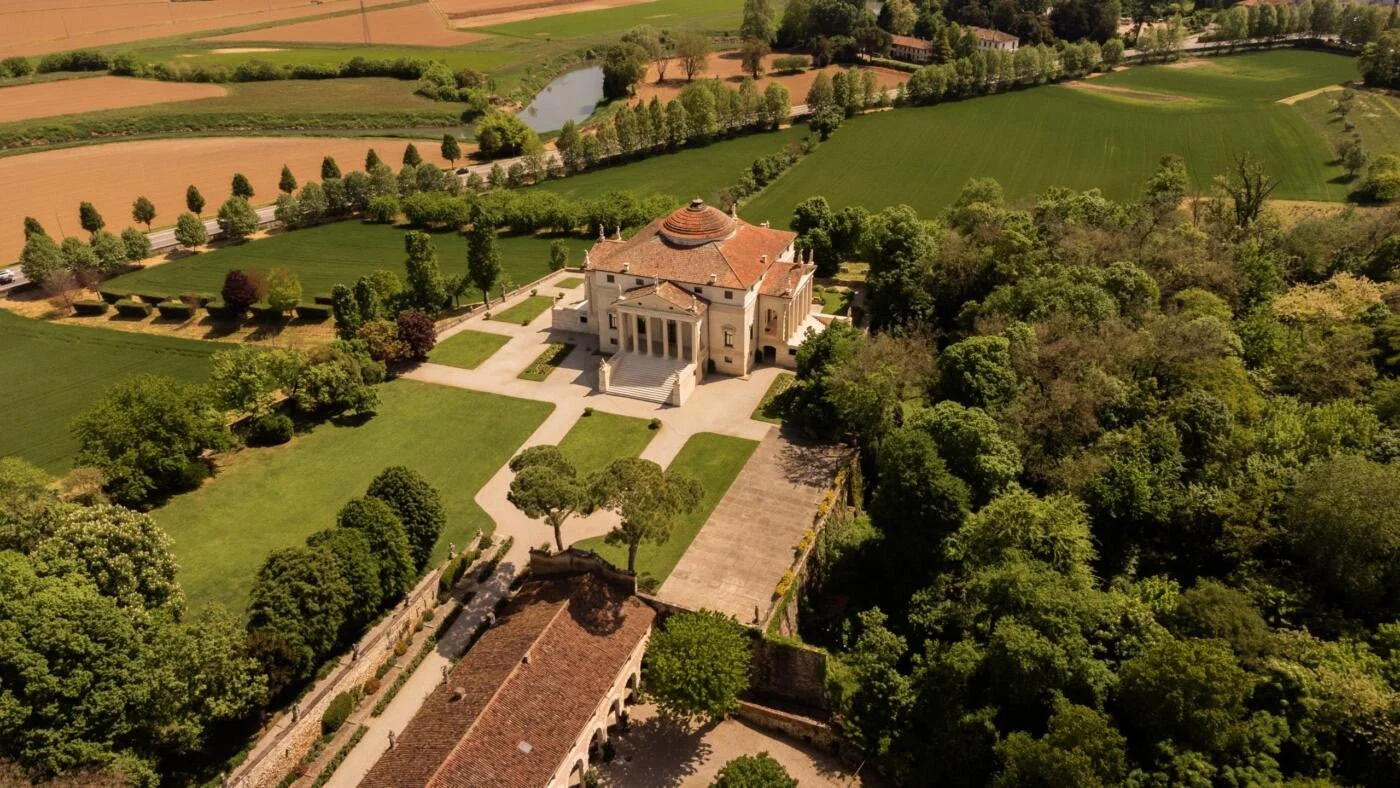
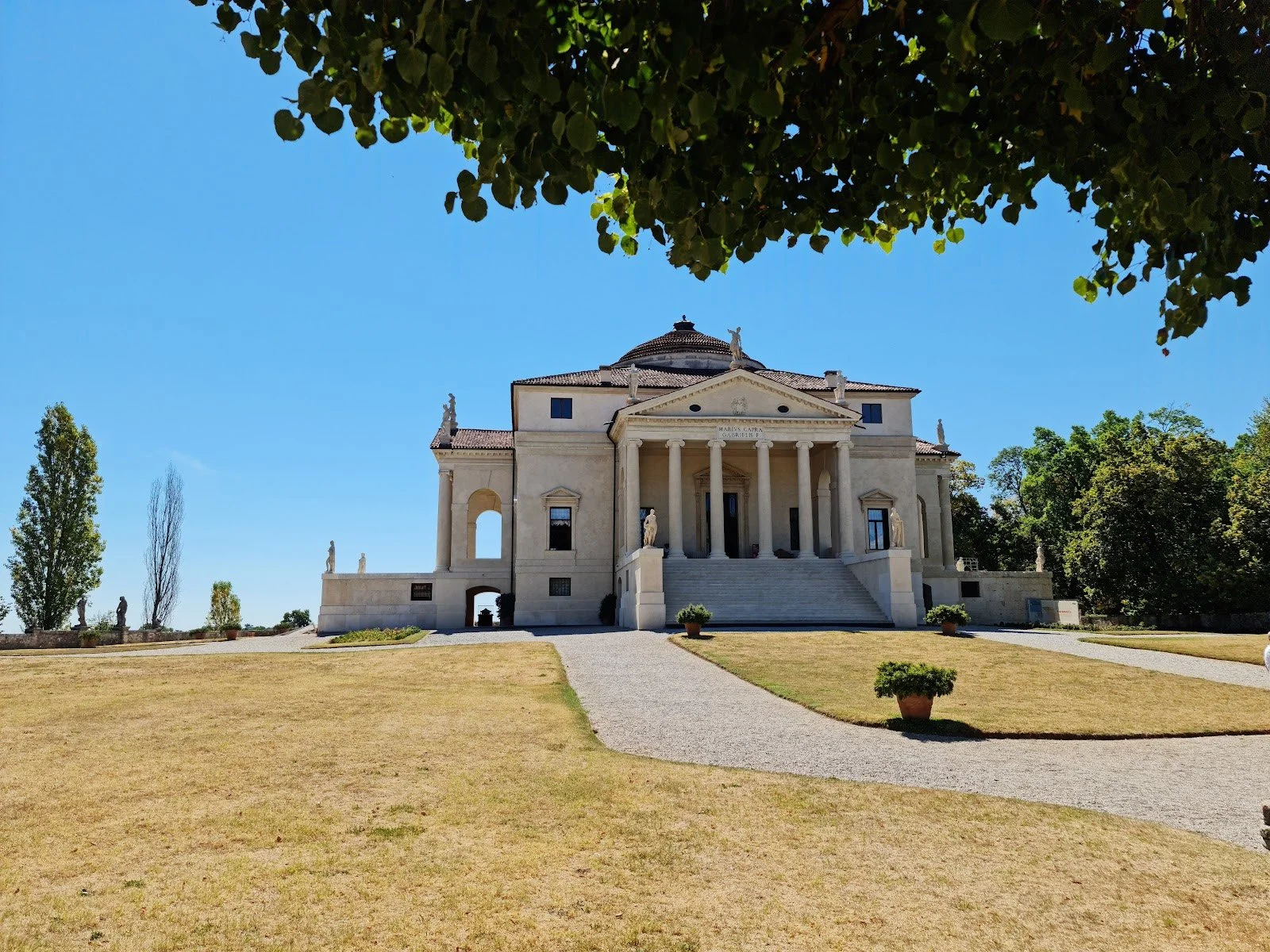
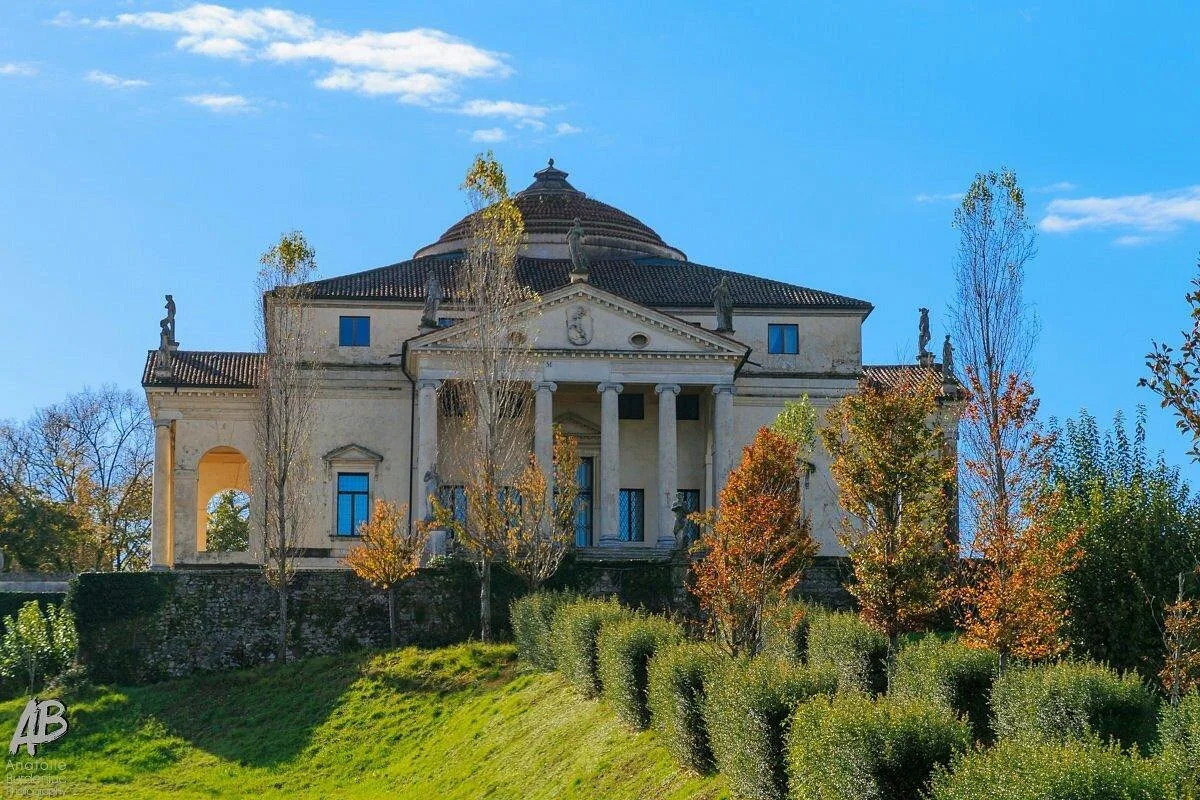
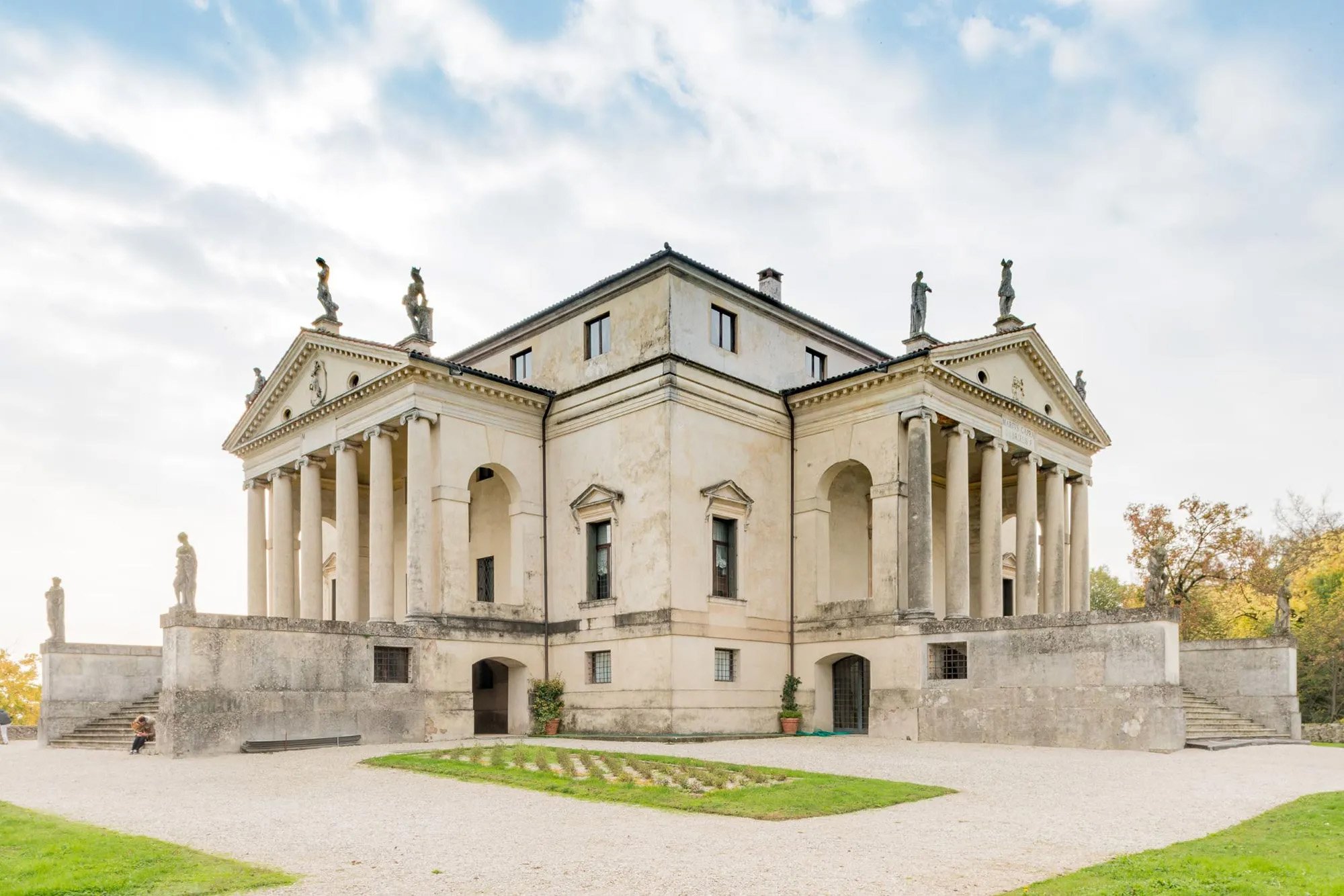
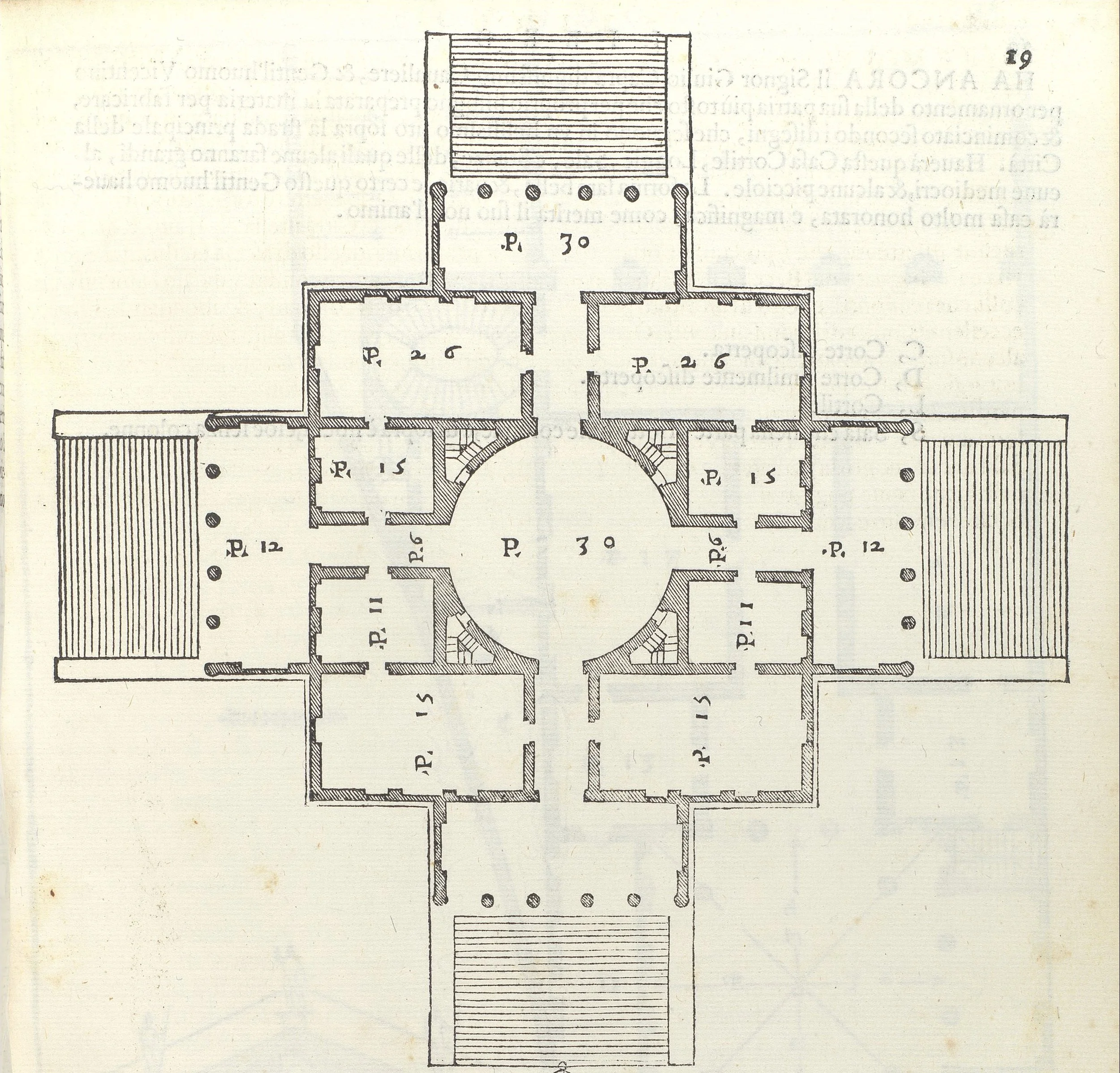
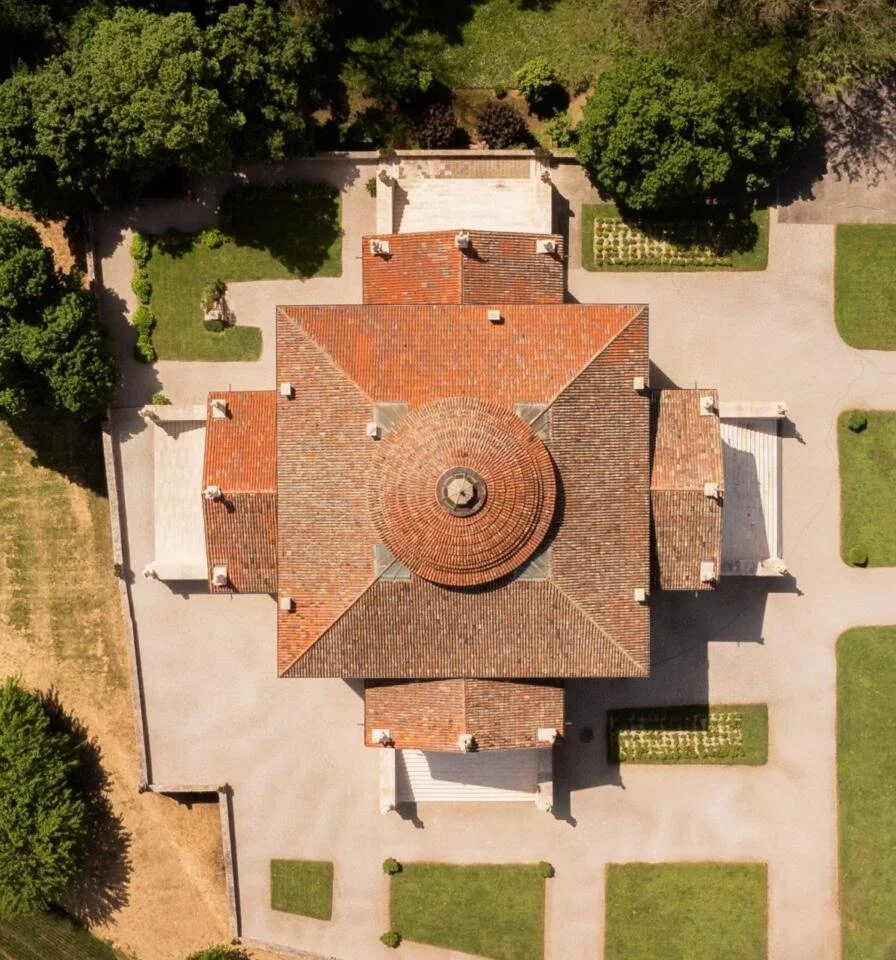
The site selected was a hilltop just outside the city of Vicenza. Unlike some other Palladian villas of the Veneto, the building was not designed from the start to accommodate a working farm. This sophisticated building was designed for a site which was, in modern terminology, "suburban". Palladio classed the building as a "palazzo" rather than a villa. The design is for a completely symmetrical building having a square plan with four facades, each of which has a projecting portico. The whole is contained within an imaginary circle which touches each corner of the building and centres of the porticos.
-
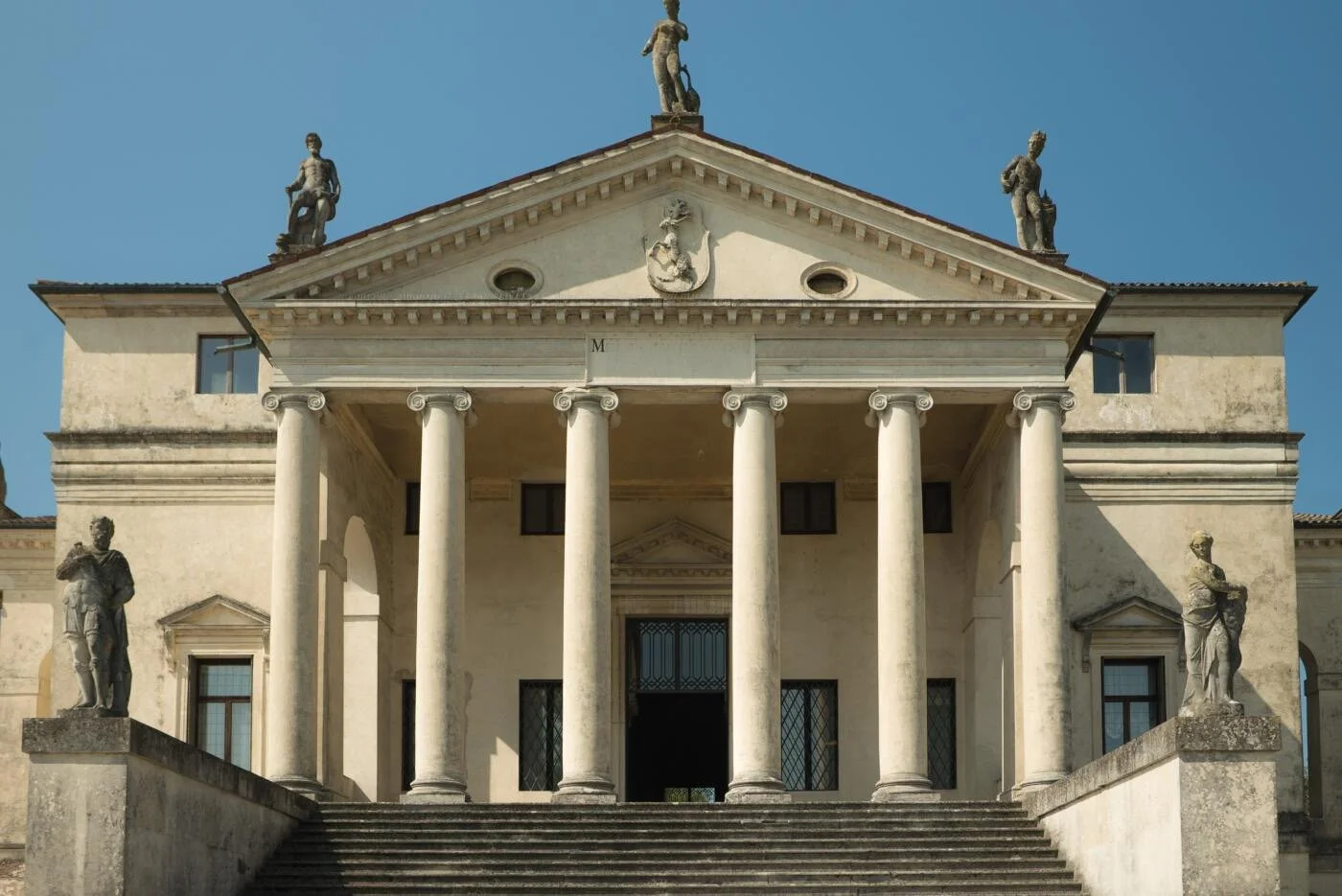
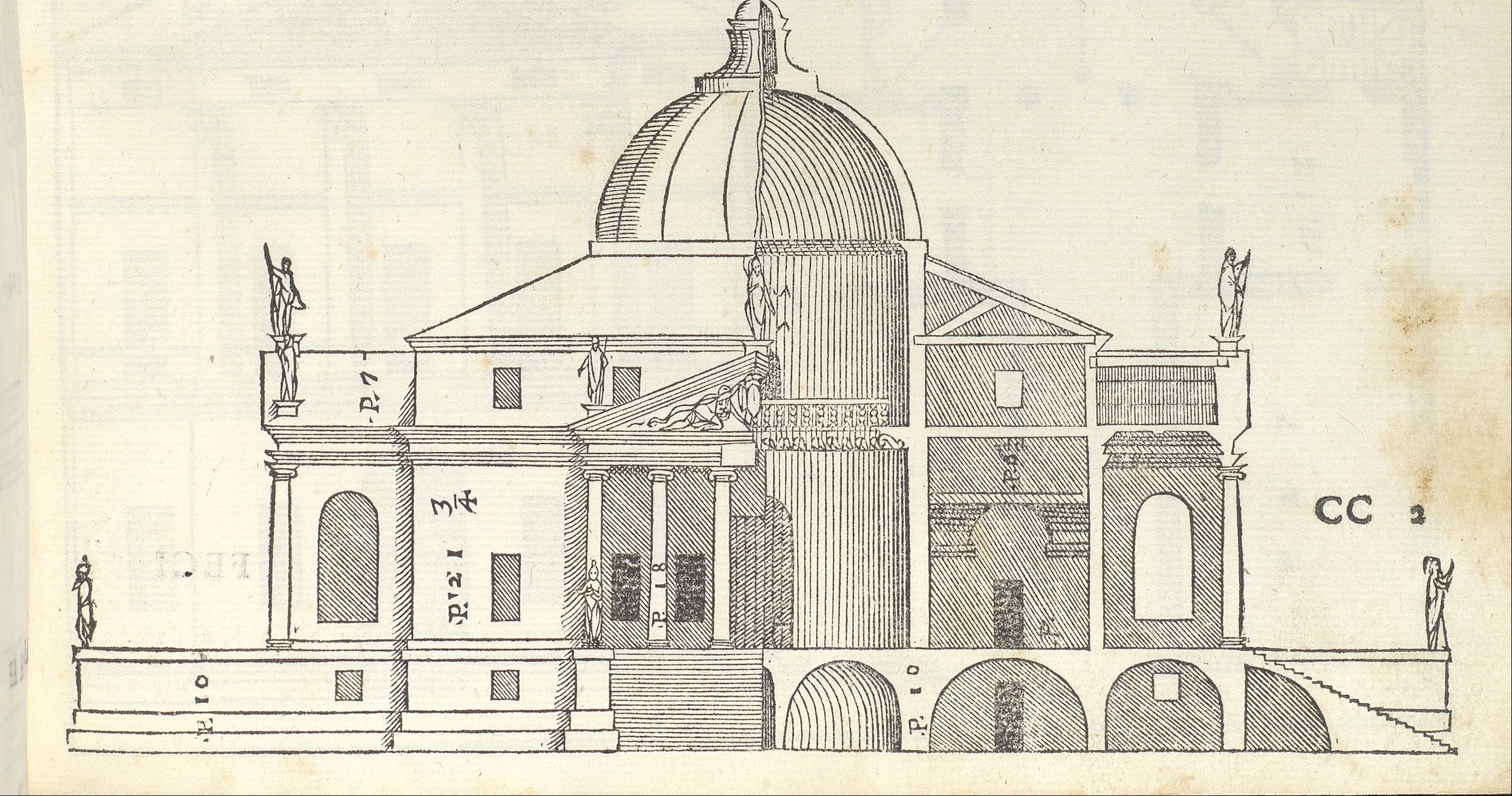
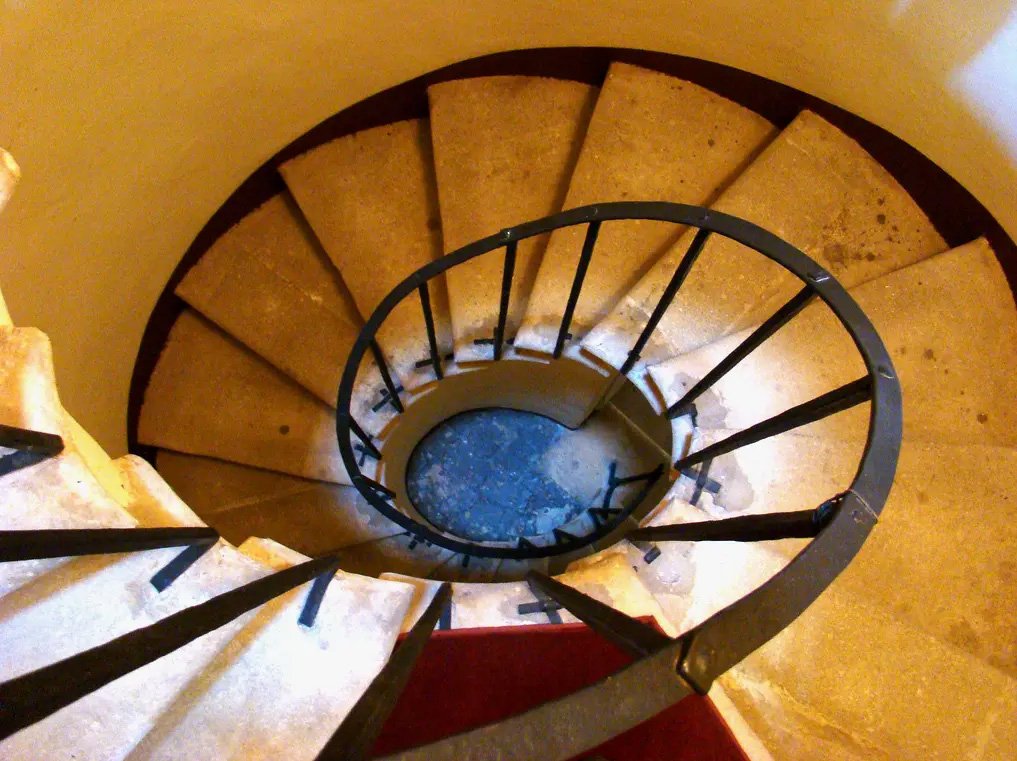
The name La Rotonda refers to the central circular hall with its dome. To describe the villa, as a whole, as a rotunda is technically incorrect, as the building is not circular but rather the intersection of a square with a cross. Each portico has steps leading up to it, and opens via a small cabinet or corridor to the circular domed central hall. This and all other rooms were proportioned with mathematical precision according to Palladio's rules of architecture which he published in I quattro libri dell'architettura. Work spaces for the villa's servants are hidden underneath the first floor, which is accessed via staircases hidden inside the walls of the central hall.
The design reflected the humanist values of Renaissance architecture. In order for each room to have some sun, the design was rotated 45 degrees from each cardinal point of the compass. Each of the four porticos has pediments graced by statues of classical deities. The pediments were each supported by six Ionic columns. Each portico was flanked by a single window. All principal rooms were on the second floor or piano nobile.
Building began in 1567. Neither Palladio nor the owner, Paolo Almerico, were to see the completion of the villa. Palladio died in 1580 and a second architect, Vincenzo Scamozzi, was employed by the new owners to oversee the completion. One of the major changes he made to the original plan was to modify the two-storey central hall.
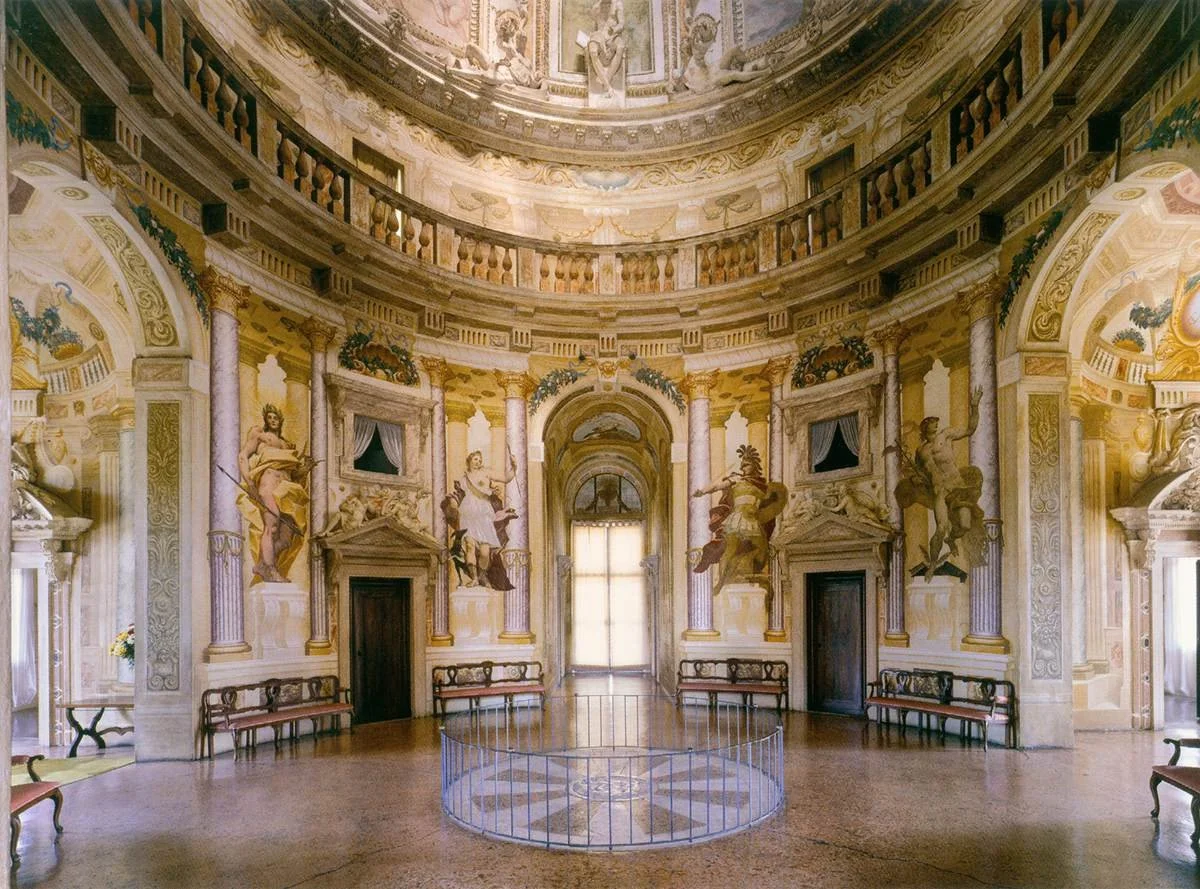
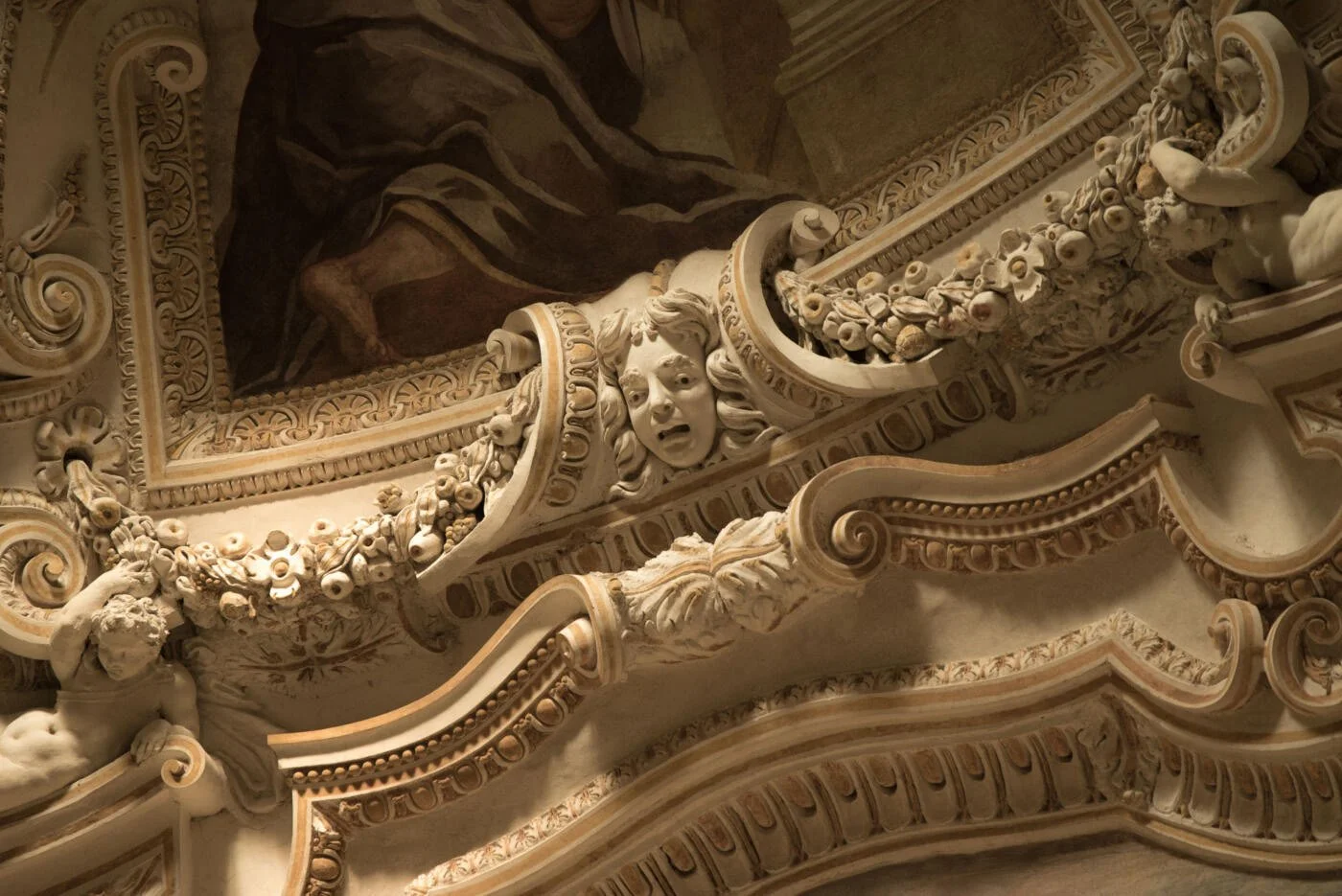
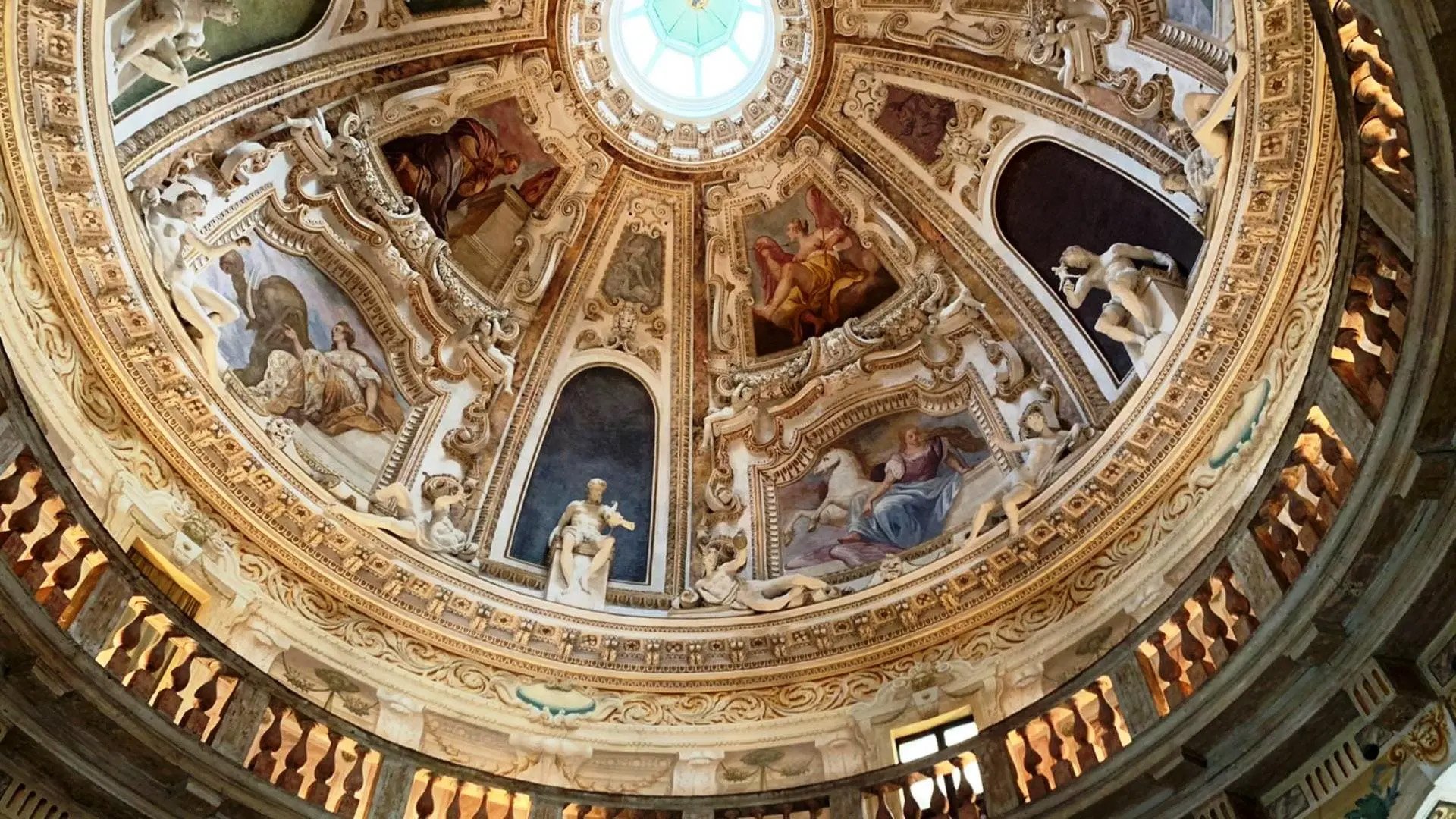
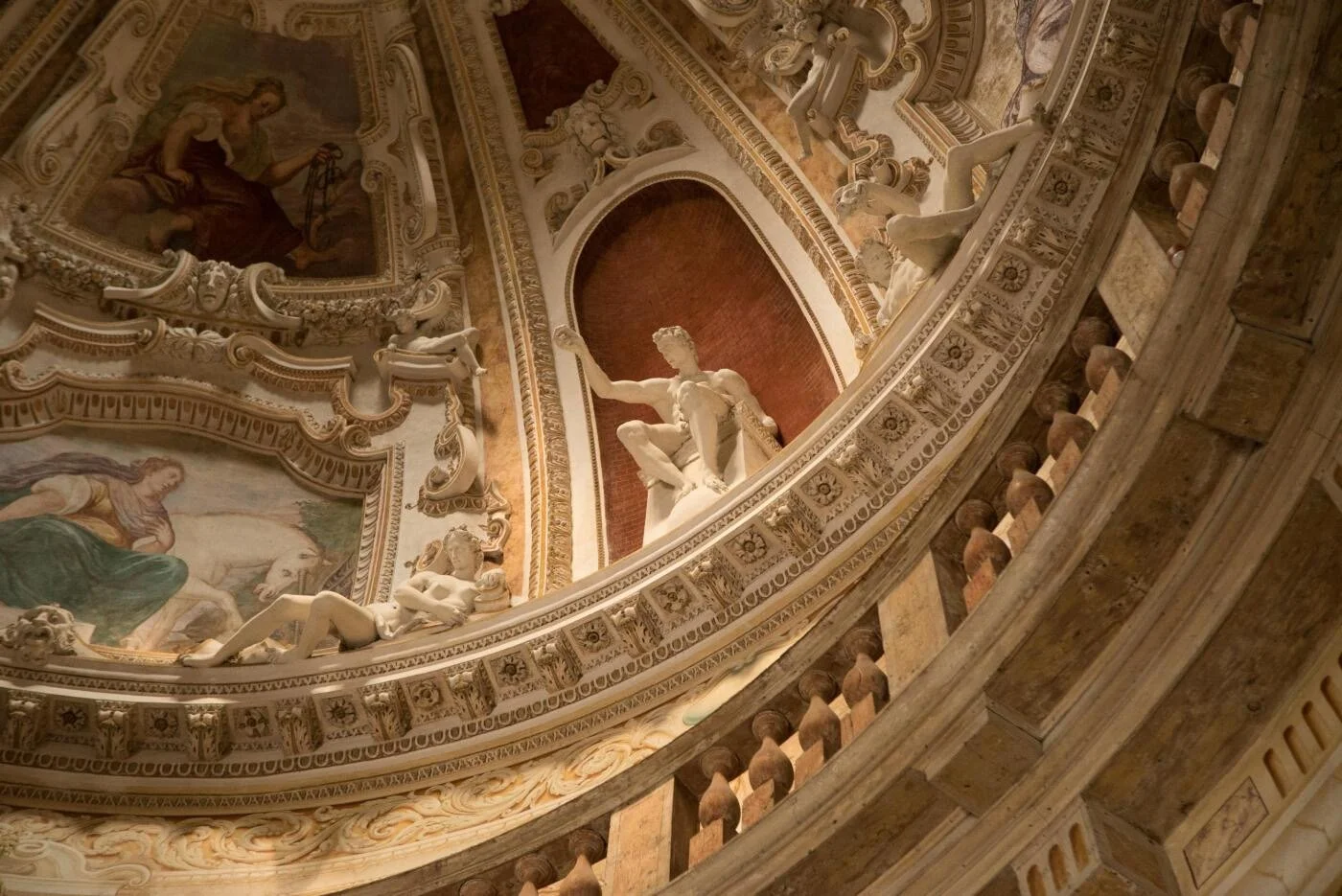
Palladio had intended it to be covered by a high semi-circular dome but Scamozzi designed a lower dome with an oculus (intended to be open to the sky) inspired by the Pantheon in Rome. The dome was ultimately completed with a cupola. The interior design of the Villa was to be as wonderful, if not more so, than the exterior. Alessandro and Giovanni Battista Maganza and Anselmo Canera were commissioned to paint frescoes in the principal salons. Among the four principal salons on the piano nobile are the West Salon (also called the Holy Room, because of the religious nature of its frescoes and ceiling), and the East Salon, which contains an allegorical life story of the first owner, Paolo Almerico, his many admirable qualities portrayed in fresco.
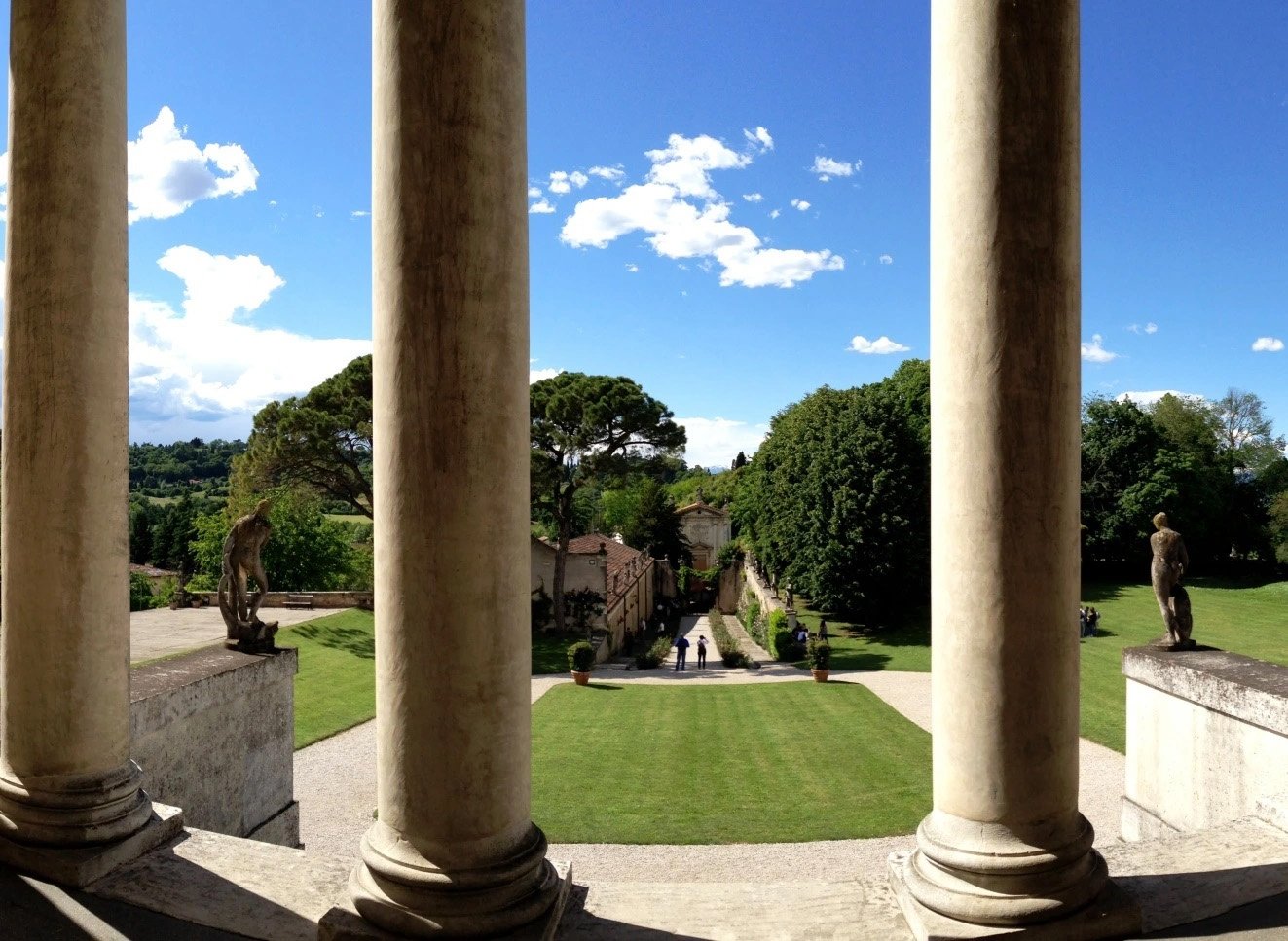
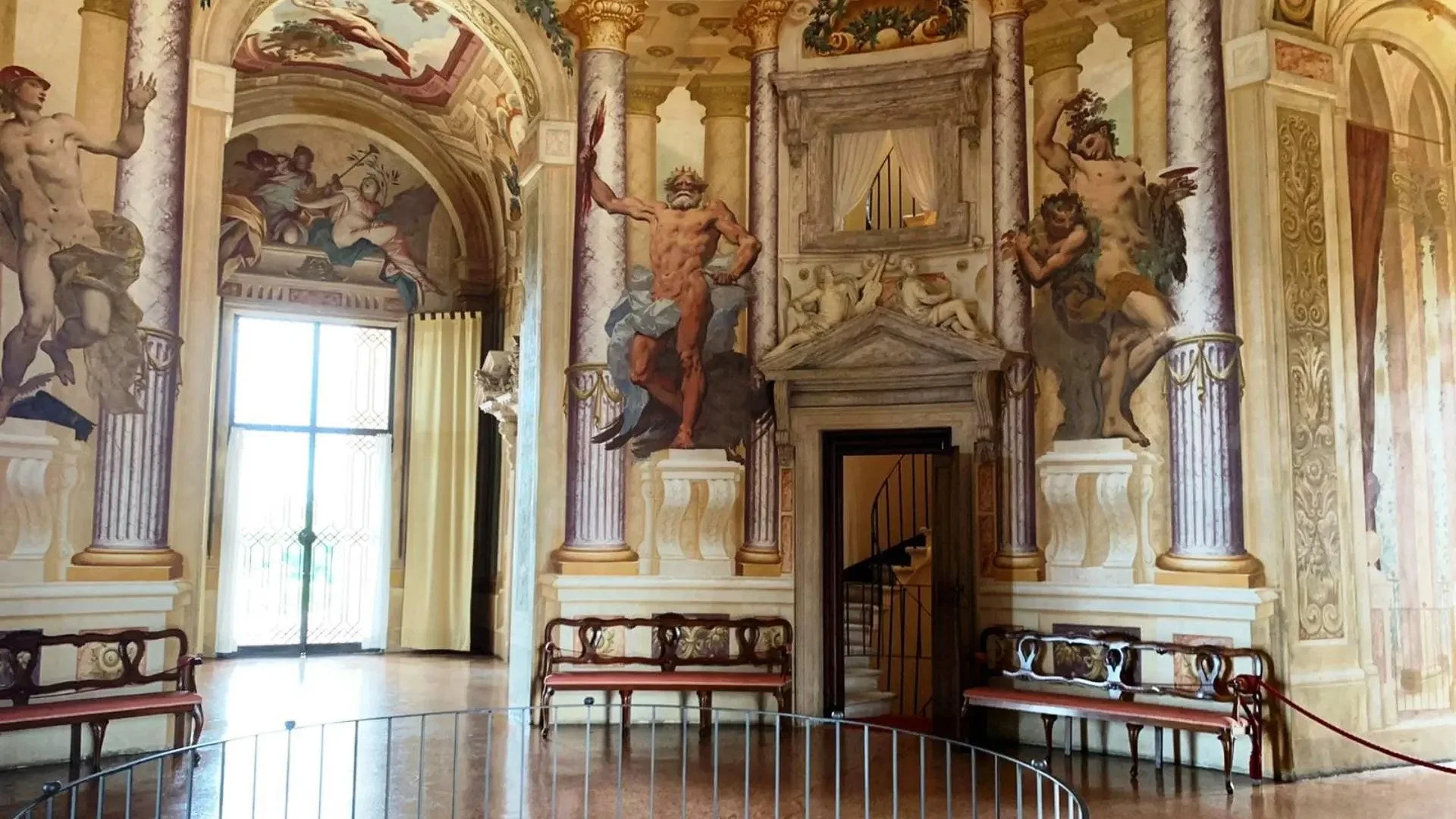
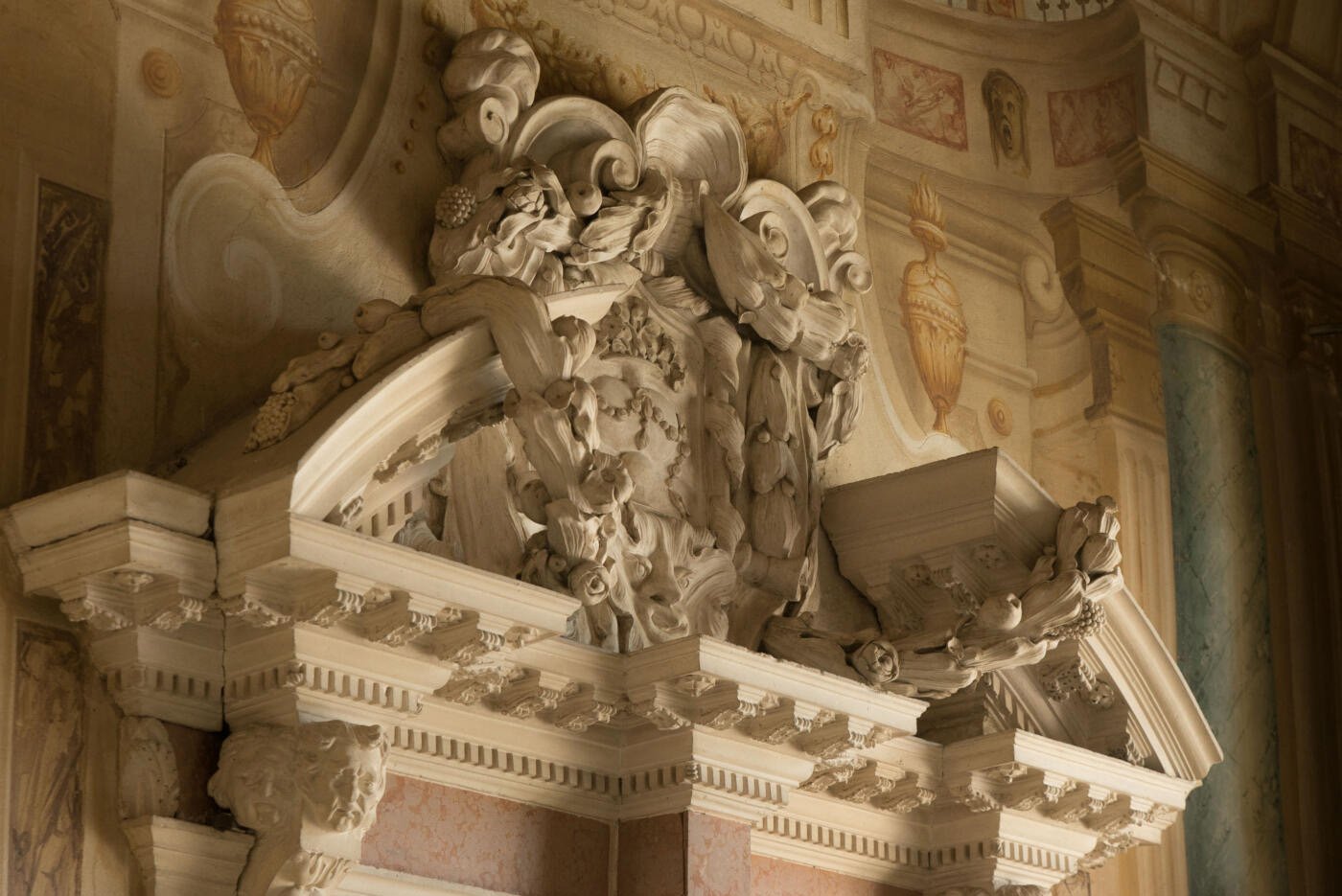
The highlight of the interior is the central, circular hall, surrounded by a balcony and covered by the domed ceiling; it soars the full height of the main house up to the cupola, with walls decorated in trompe-l'œil. Abundant frescoes create an atmosphere that is more reminiscent of a cathedral than the principal salon of a country house. From the porticos, views of the surrounding countryside can be seen; this is purposeful as the Villa was designed to be in harmony with the landscape. This was in contrast to such buildings as Villa Farnese of just 16 years earlier.
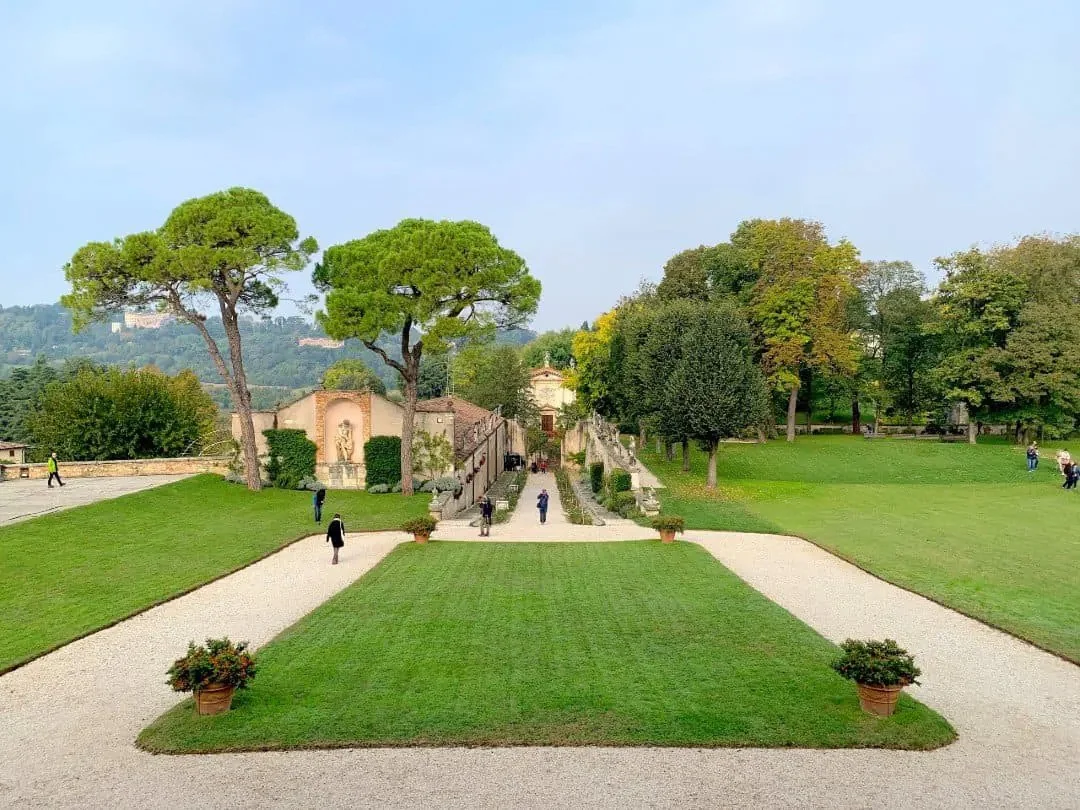
While the house appears to be completely symmetrical, it actually has deviations, designed to allow each façade to complement the surrounding landscape and topography. Hence, there are variations in the façades, in the width of steps, retaining walls, etc. In this way, the symmetry of the architecture allows for the asymmetry of the landscape, and creates a seemingly symmetrical whole. The landscape is a panoramic vision of trees, meadows and woods, with Vicenza on the horizon. The northwest portico is set onto the hill as the termination of a straight carriage drive from the principal gates. This carriageway is an avenue between the service blocks, built by the Capra brothers, who acquired the Villa in 1591; they commissioned Vincenzo Scamozzi to complete the villa and construct the range of staff and agricultural buildings.
View Original Text & Read More


Related Curated Collections: Adventurous Contemporary
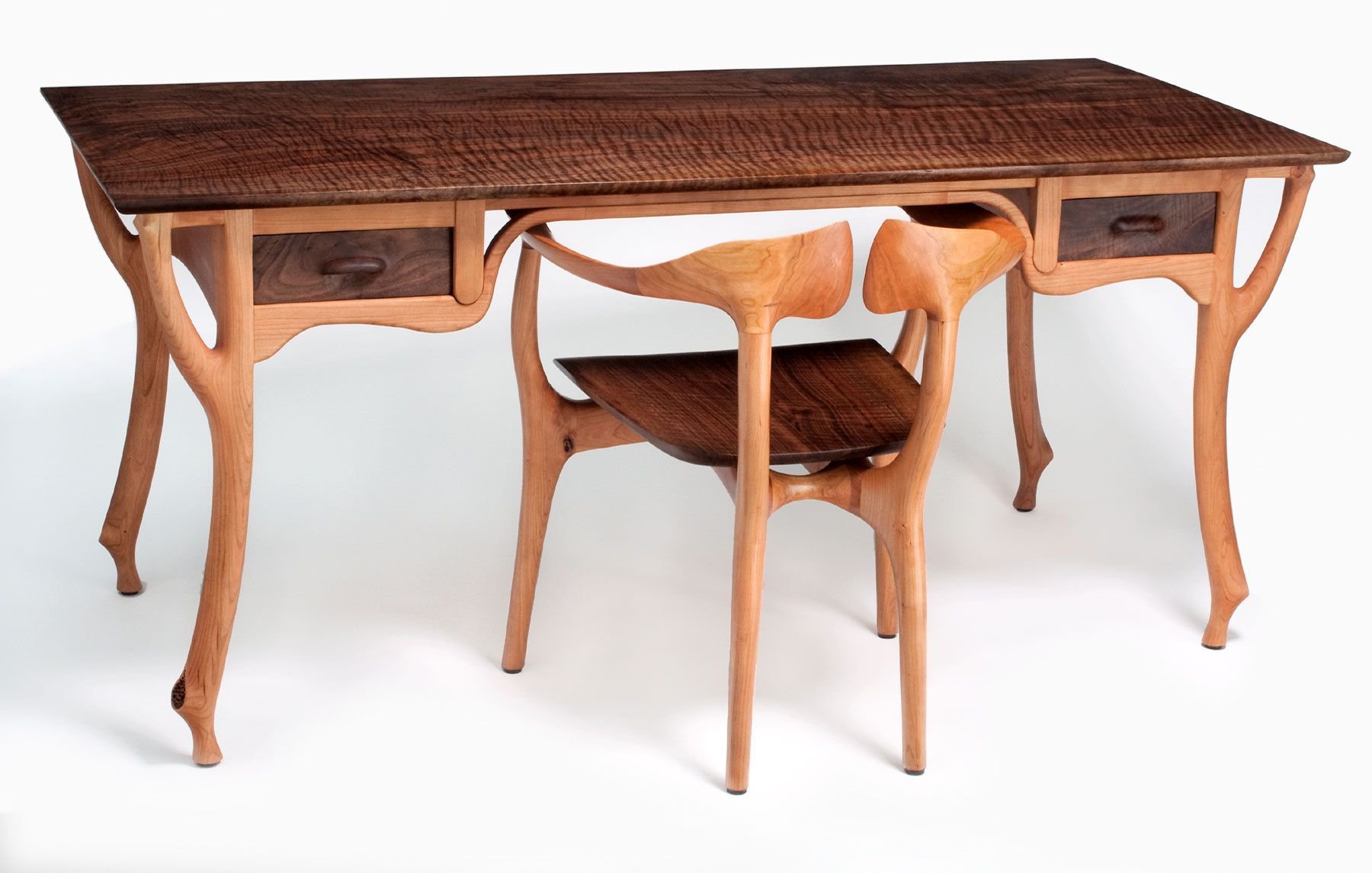
Office
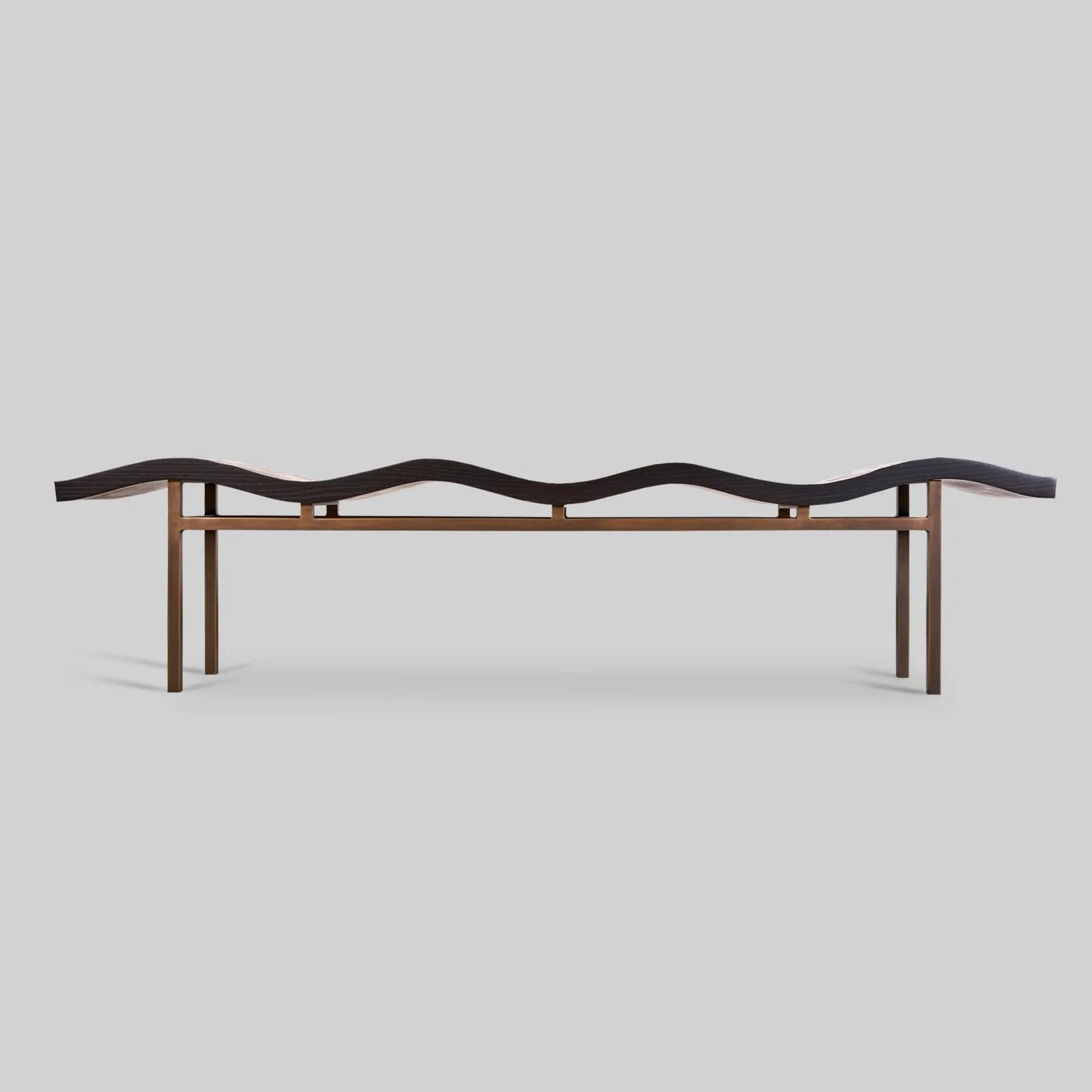
Hallway
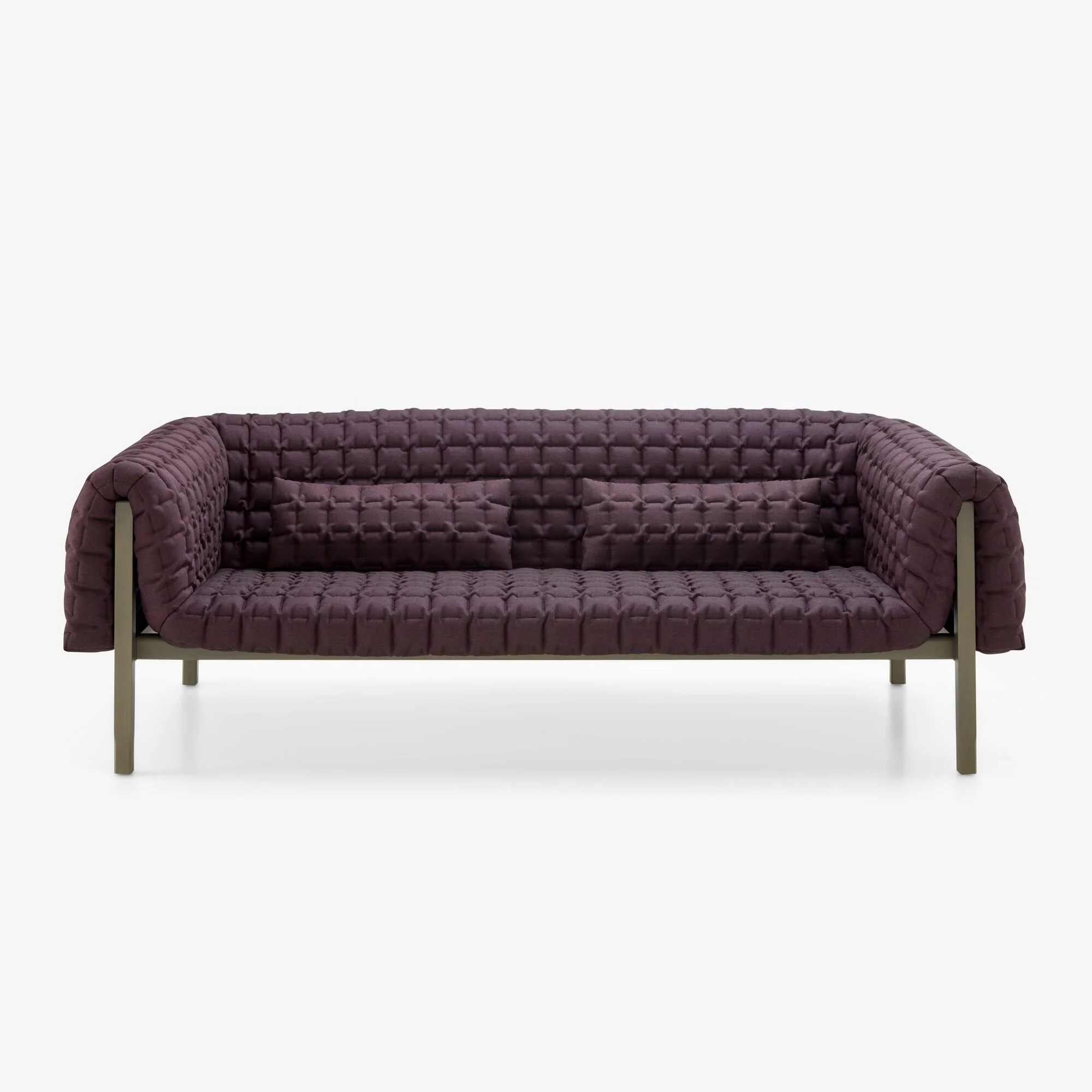
Living Room
Villa La Rotonda
The copyright of photographs of inspiring places are held by the authors of the photographs or are within the public domain. By presenting these images, our intention is to showcase the extraordinary spaces that they capture, increase awareness of these homes, and encourage visitors to purchase tickets and visit them in-person. As is the case with the source of these images, they are offered free of charge and accessible to anyone who searches for the specific inspiring place. In order to streamline the virtual experience of these homes, we have not highlighted attribution. If you are the author of any photograph and would like specific attribution or us to create a link to the original photograph or your business or body of photographic work, please contact us at info@ourthings.io and we would be more than happy to accommodate your request. If you would not like your work to be featured, we would also be happy to remove the image. Images credits for this inspiring home include: N/A.
