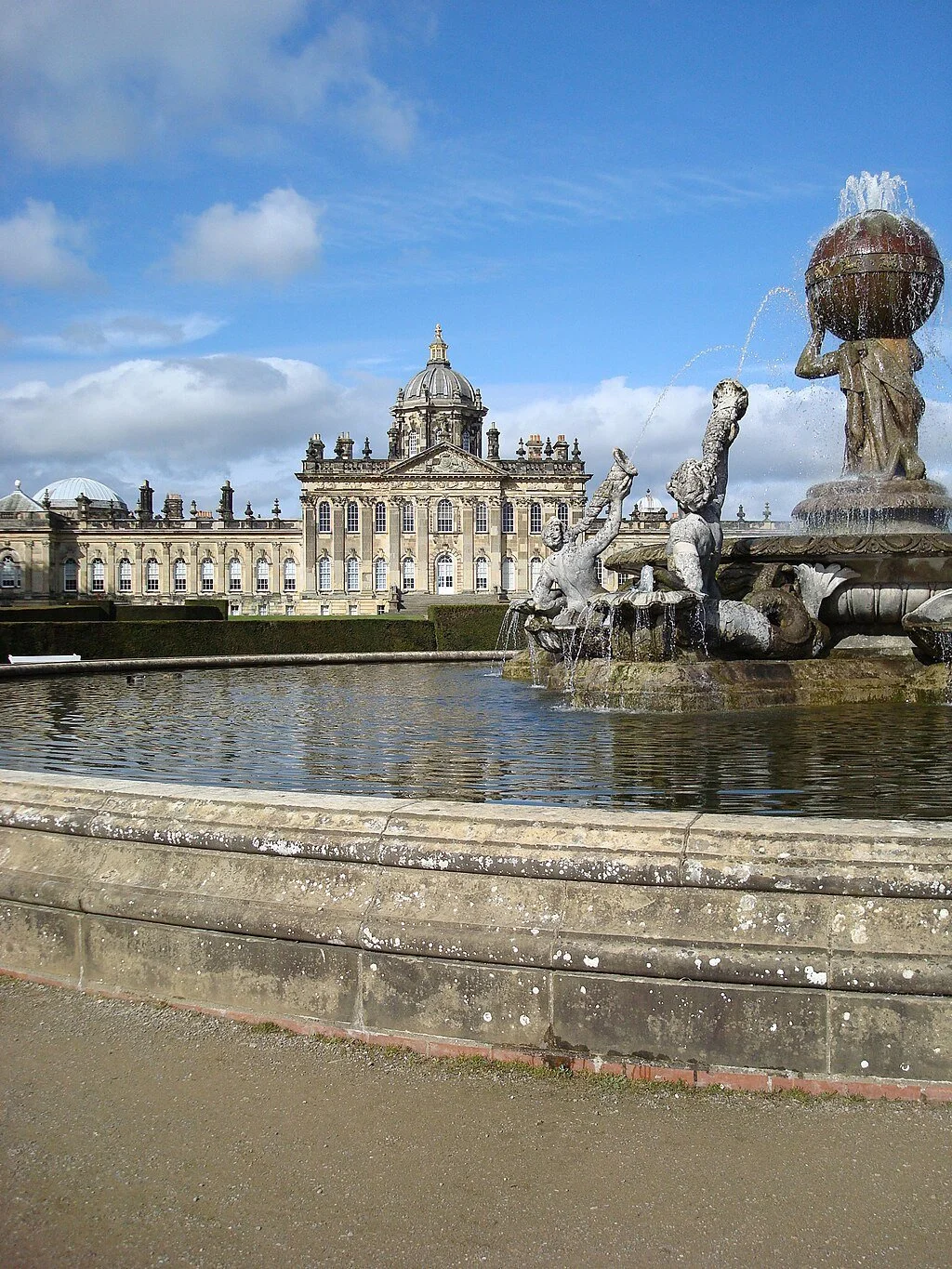

Renaissance & Baroque
Dates: mid-1400s to 1750
Examples: Palladian, Mannerism, Henry II, Louis XIII, Tudor, Elizabethan, Jacobean, Dutch Colonial
Description: Renaissance and Baroque architecture represent two transformative periods that redefined European design, emerging from distinct cultural and intellectual movements. Renaissance architecture, which took hold in Italy during the 15th century, marked a "rebirth" of classical ideas influenced by Roman and Greek forms. Cities like Florence, Rome, and Milan became the epicenters of this movement. The Renaissance was propelled by a renewed interest in ancient ruins and classical knowledge, including texts preserved in the Arab world, and coincided with the growth of mercantilism, European trade, and banking innovations such as double-entry bookkeeping by the Medici in Florence. Advances in optics—fostered by Venice's glass industry—improved navigation, which, together with innovations in shipbuilding and the maturation of the Silk and Spice Routes, ignited the Age of Exploration. This period of expanded trade and exploration brought wealth that transformed Italy and much of Europe between 1450 and 1750, fueling architectural and cultural developments that defined the era.
-
Architects like Brunelleschi and Alberti embraced order, symmetry, and proportion, reviving ancient styles such as columns and domes while prioritizing balance and harmony. This period was closely connected to developments in perspective, science, and anatomy, reflected in the architectural pursuit of spatial accuracy and mathematical precision. The architecture emphasized stability and was often centered on public buildings, churches, and palaces that demonstrated classical restraint and elegance, as seen in the Florence Cathedral or St. Peter’s Basilica. Renaissance architects and patrons sought to reshape the disordered medieval city, creating new routes and public spaces that highlighted patrons' wealth and influence. These urban transformations often culminated in prominent piazzas, churches, or palazzi, with the Vatican serving as the most iconic example of this strategic and symbolic city planning.
Renaissance domestic architecture or palazzi drew inspiration from classic Roman courtyard homes, expanding them to a grander scale. The first two levels were often reserved for commercial spaces, apartments for shopkeepers, and stables. Above, the grand piano nobile (main floor) served as an elegant entertaining space, with private bedrooms and staff quarters situated on higher floors. These palazzi were accompanied by rural villas that were ideally situated to frame the landscape and flow seamlessly between interior and a series of terraces leading to formal gardens. The organization and hierarchy of levels in Renaissance architecture, along with the column styles and facade detailing at bases, corners, and roofs, were shaped by a revival of classical orders—Doric, Ionic, and Corinthian—and a renewed emphasis on classical proportions. These estates were decorated by frescoes and sculptures– both made at the time and of ancient origin. The subject matter often focused on biblical narratives while also making room for a revival of ancient mythology.
Baroque architecture, beginning in the 17th century, pushed these Renaissance principles into a dramatic and theatrical realm. Originating in Rome and then spreading across Europe, the Baroque style was characterized by dynamic forms, elaborate ornamentation, and a heightened sense of grandeur and motion. Architects like Bernini and Borromini introduced complex, curvilinear shapes, intricate carvings, and elements like broken pediments and large domes that enhanced the visual impact of light and shadow. Structures were designed to evoke strong emotions, with a sense of movement and energy conveyed through undulating facades and dramatic contrasts. This style often served the Counter-Reformation's aim to captivate and inspire devotion, making it common in churches like St. Peter’s Square and royal structures such as the Palace of Versailles.
Together, Renaissance and Baroque architecture encapsulate the transition from classical revival to emotional expressiveness, demonstrating how architecture not only shapes physical spaces but also reflects the evolving cultural and philosophical values of its time. The Renaissance emphasized humanistic ideals and symmetry, while the Baroque sought to engage viewers through grandeur and dynamism, both leaving an enduring legacy on Western architectural history.