

Monticello
Architect: Thomas Jefferson
Sub-Style: Neo-Palladian
Year Completed: 1772
Size: 11,000 sq ft
Location: Albemarle County, Virginia, USA

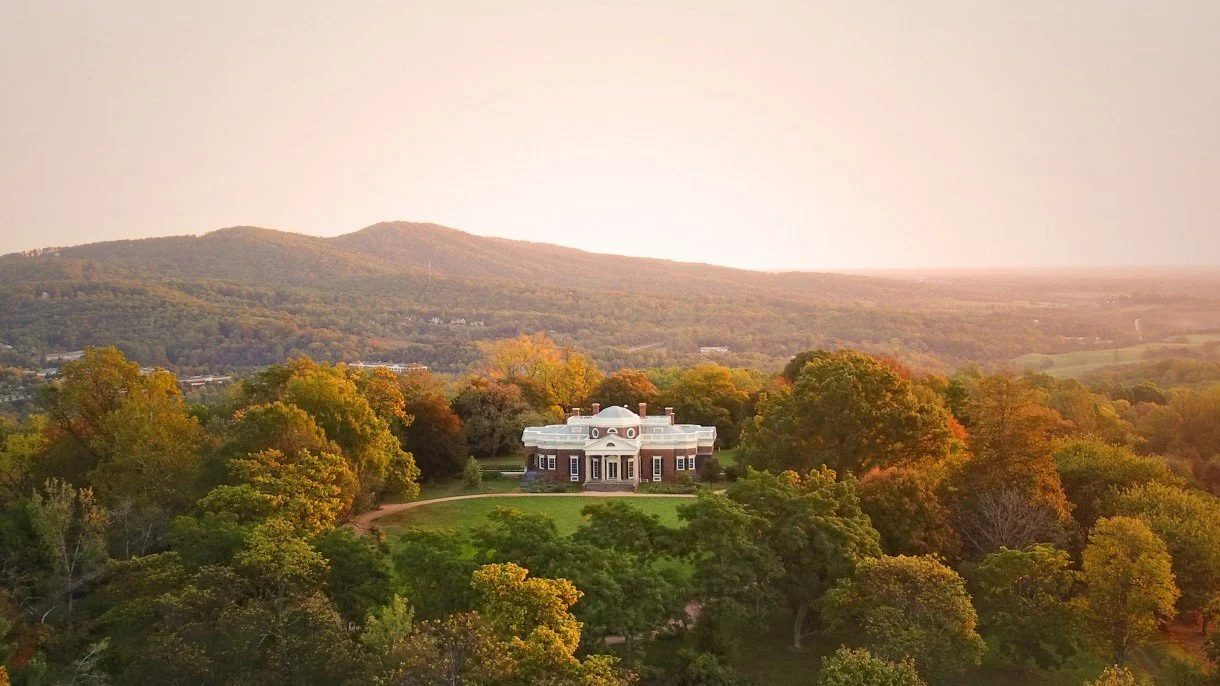
Monticello was the primary plantation of Thomas Jefferson, a Founding Father, author of the Declaration of Independence, and the third president of the United States, who began designing Monticello after inheriting land from his father at the age of 14. Located just outside Charlottesville, Virginia, in the Piedmont region, the plantation was originally 5,000 acres (20 km2), with Jefferson using the forced labor of black slaves for extensive cultivation of tobacco and mixed crops, later shifting from tobacco cultivation to wheat in response to changing markets. Due to its architectural and historic significance, the property has been designated a National Historic Landmark. In 1987, Monticello and the nearby University of Virginia, also designed by Jefferson, were together designated a UNESCO World Heritage Site. The United States nickel has featured a depiction of Monticello on its reverse since 1938 (except for 2004-05).
Jefferson designed the main house using neoclassical design principles pioneered by Italian Renaissance architect Andrea Palladio and reworking the design through much of his presidency to include design elements popular in late 18th-century Europe and integrating numerous ideas of his own. Situated on the summit of an 850 ft-high (260 m) peak in the Southwest Mountains south of the Rivanna Gap, the name Monticello derives from Italian meaning "little mountain". Along a prominent lane adjacent to the house, Mulberry Row, the plantation came to include numerous outbuildings for specialized functions, e.g., a nailery; quarters for slaves who worked in the home; gardens for flowers, produce, and Jefferson's experiments in plant breeding—along with tobacco fields and mixed crops. Cabins for slaves who worked in the fields were farther from the mansion.
-
At Jefferson's direction, he was buried on the grounds, in an area now designated as the Monticello Cemetery. The cemetery is owned by the Monticello Association, a society of his descendants through Martha Wayles Skelton Jefferson. After Jefferson's death, his daughter Martha Jefferson Randolph, apart from the small family graveyard, sold Monticello for $7,500. In 1834, it was bought by Uriah P. Levy, a commodore in the U.S. Navy, for $2,500, (~$81,513 in 2023) who admired Jefferson and spent his own money to preserve the property. His nephew Jefferson Monroe Levy took over the property in 1879; he also invested considerable money to restore and preserve it. In 1923, Monroe Levy sold it for $500,000 (~$6.96 million in 2023) to the Thomas Jefferson Foundation (TJF), which operates it as a house museum and educational institution.
Jefferson's home was built to serve as a plantation house, which ultimately took on the architectural form of a villa.[6] Work began on what historians would subsequently refer to as "the first Monticello" in 1768, on a plantation of 5,000 acres (2,000 ha). Jefferson moved into the South Pavilion (an outbuilding) in 1770, where his new wife Martha Wayles Skelton joined him in 1772. Jefferson continued work on his original design, but how much was completed is of some dispute.[6] In constructing and later reconstructing his home, Jefferson used a combination of free workers, indentured servants, and slaves.
After his wife's death in 1782, Jefferson left Monticello in 1784 to serve as Minister of the United States to France. During his several years in Europe, he had an opportunity to see some of the classical buildings with which he had become acquainted from his reading, as well as to discover the "modern" trends in French architecture that were then fashionable in Paris. His decision to remodel his own home may date from this period. In 1794, following his tenure as the first U.S. Secretary of State (1790–1793), Jefferson began rebuilding his house based on the ideas he had acquired in Europe. The remodeling continued throughout most of his presidency (1801–1809). Although generally completed by 1809, Jefferson continued work on Monticello until his death in 1826.
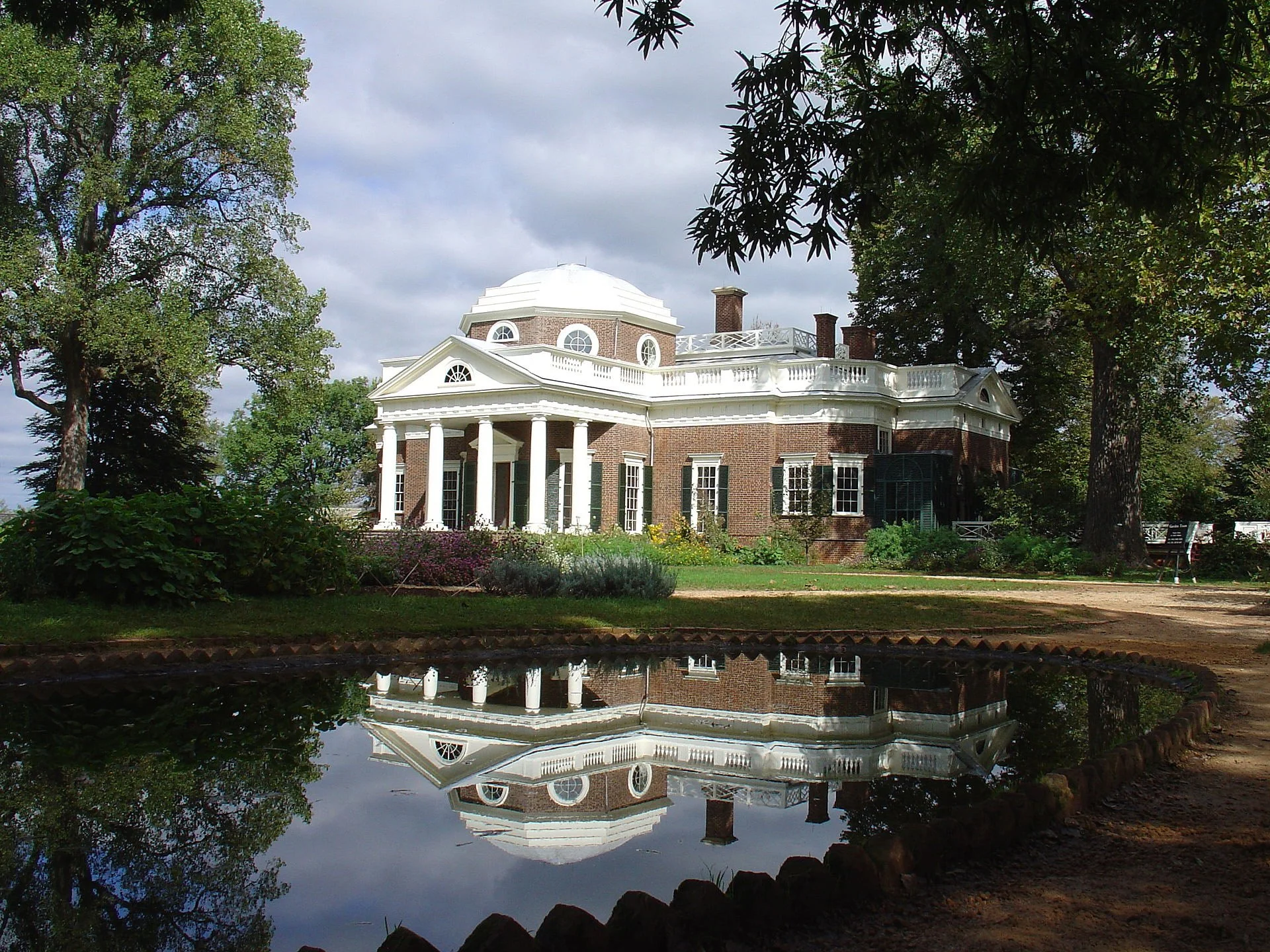
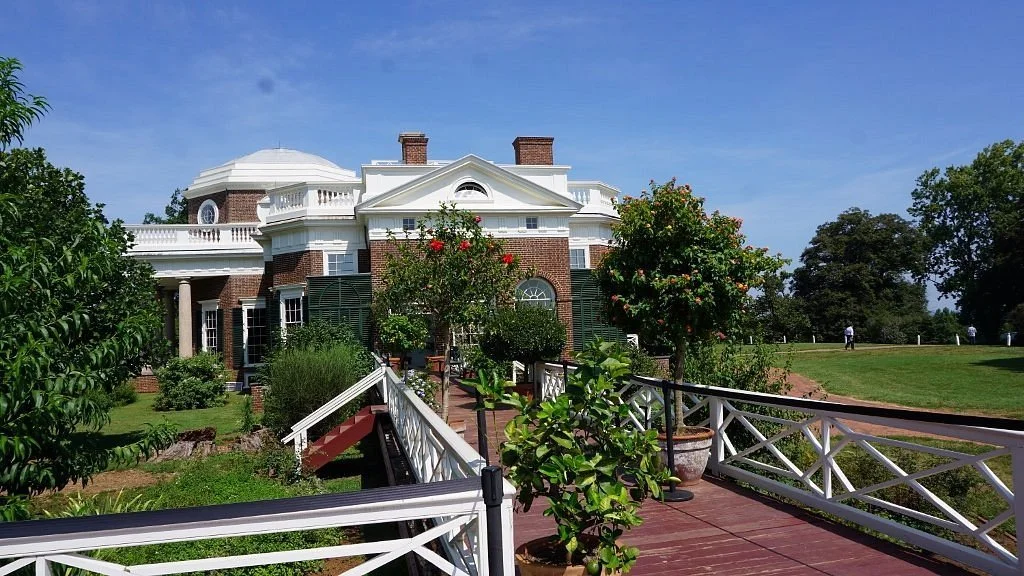
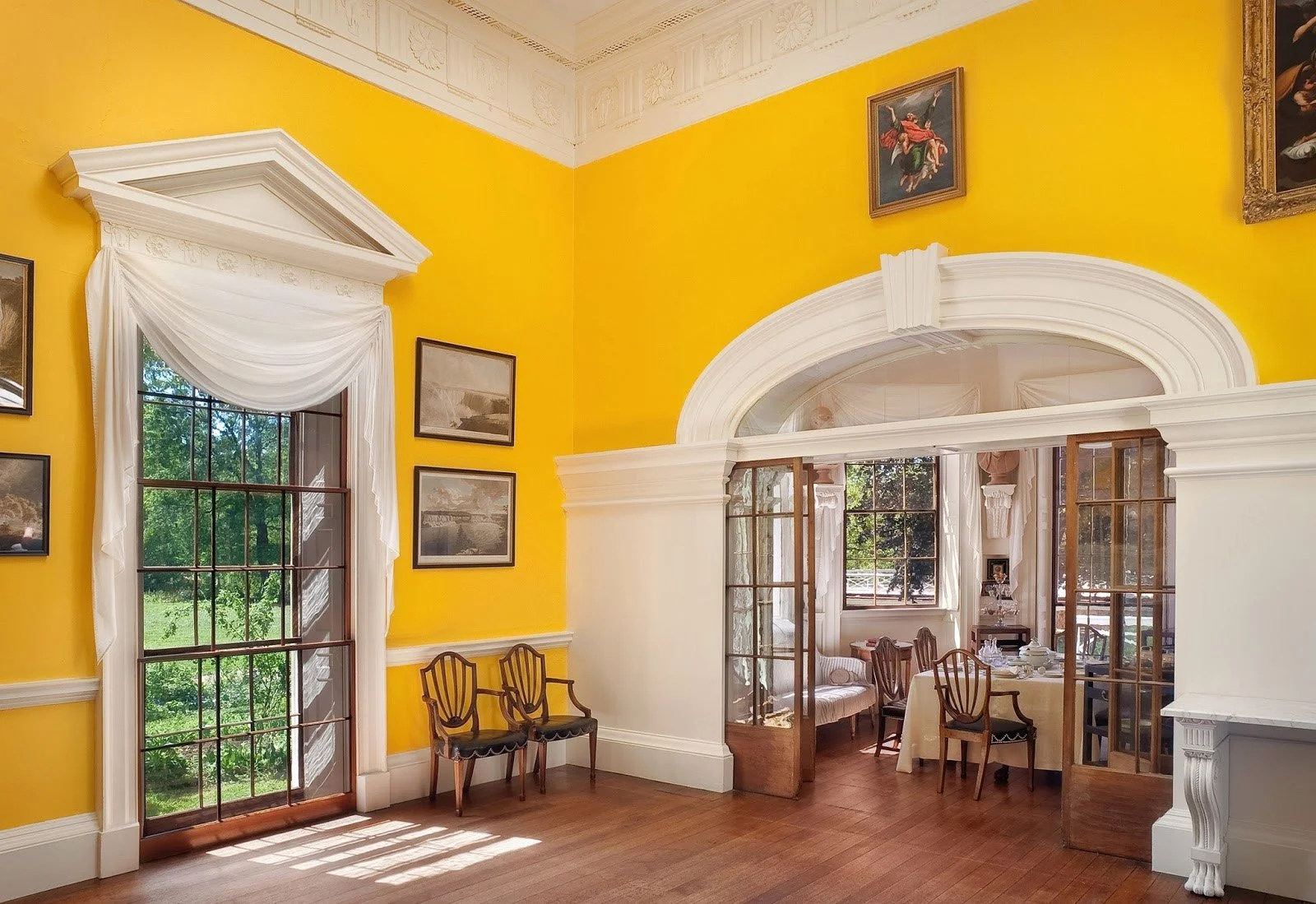
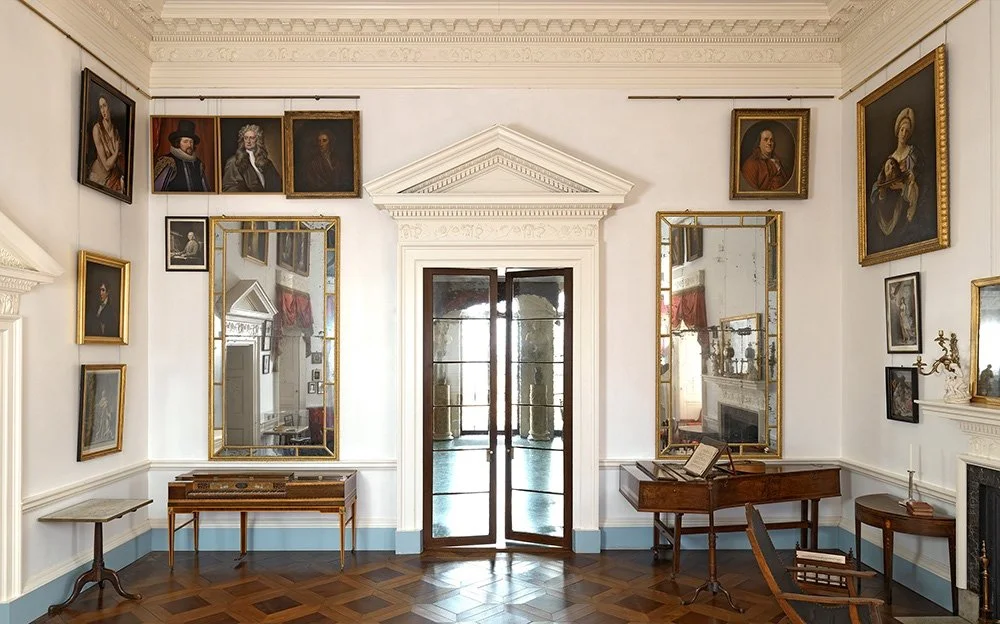
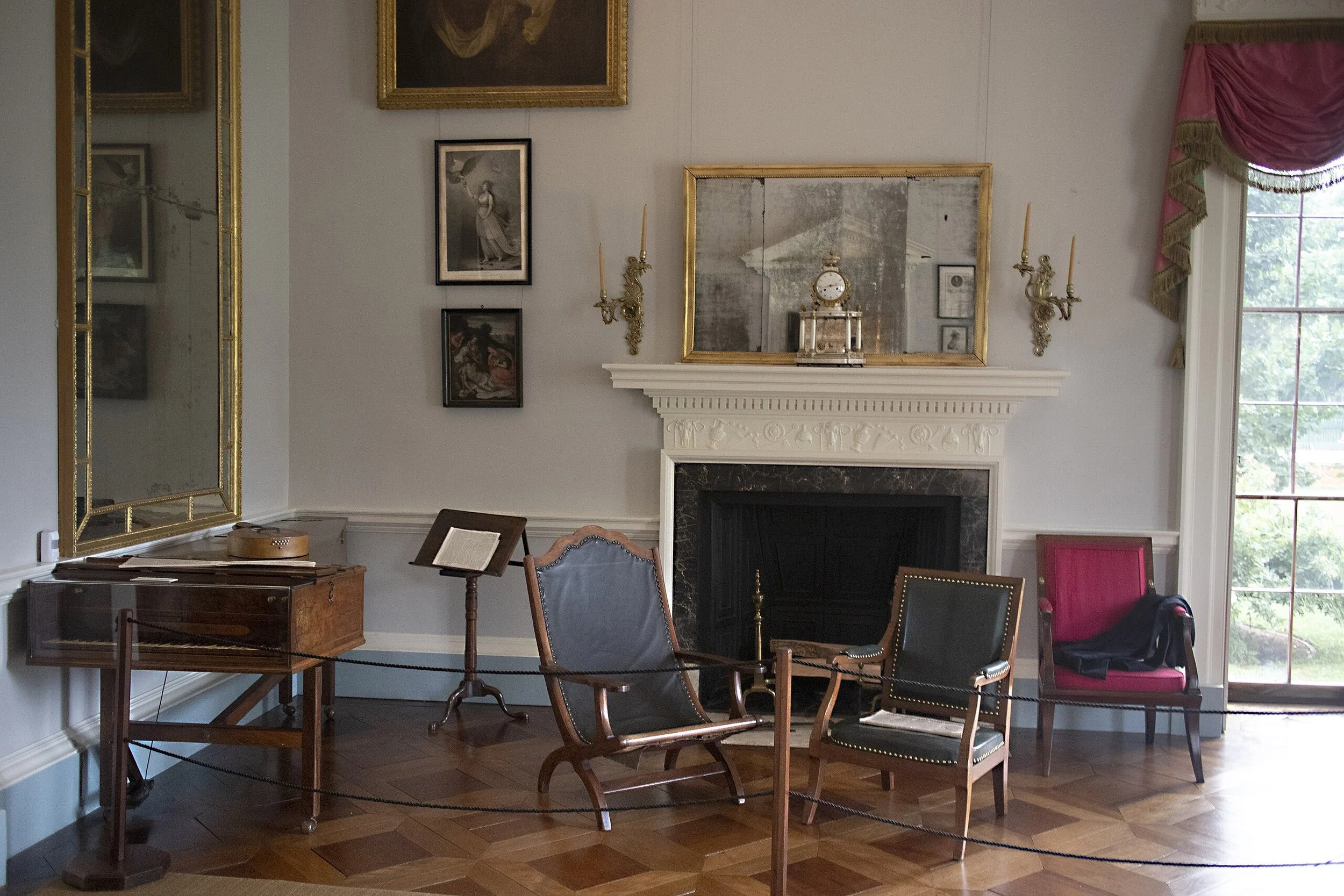
Jefferson added a center hallway and a parallel set of rooms to the structure, more than doubling its area. He removed the second full-height story from the original house and replaced it with a mezzanine bedroom floor. The interior is centered on two large rooms, which served as an entrance-hall-museum, where Jefferson displayed his scientific interests, and a music-sitting room. The most dramatic element of the new design was an octagonal dome, which he placed above the west front of the building in place of a second-story portico. The room inside the dome was described by a visitor as "a noble and beautiful apartment," but it was rarely used—perhaps because it was hot in summer and cold in winter, or because it could be reached only by climbing a steep and very narrow flight of stairs. The dome room has now been restored to its appearance during Jefferson's lifetime, with "Mars yellow" walls and a painted green and black checkered floor.
Summertime temperatures are high in the region, with indoor temperatures of around 100 °F (38 °C). Jefferson himself is known to have been interested in Roman and Renaissance texts about ancient temperature-control techniques such as ground-cooled air and heated floors.[10] Monticello's large central hall and aligned windows were designed to allow a cooling air-current to pass through the house, and the octagonal cupola draws hot air up and out.[11] In the late twentieth century, moderate air conditioning, designed to avoid the harm to the house and its contents that would be caused by major modifications and large temperature differentials, was installed in the house, a tourist attraction.
Before Jefferson's death, Monticello had begun to show signs of disrepair. The attention Jefferson's university project in Charlottesville demanded, and family problems, diverted his focus. The most important reason for the mansion's deterioration was his accumulating debts. In the last few years of Jefferson's life, much went without repair in Monticello. A witness, Samuel Whitcomb Jr., who visited Jefferson in 1824, thought it run down. He said, "His house is rather old and going to decay; appearances about his yard and hill are rather slovenly. It commands an extensive prospect but it being a misty cloudy day, I could see but little of the surrounding scenery."
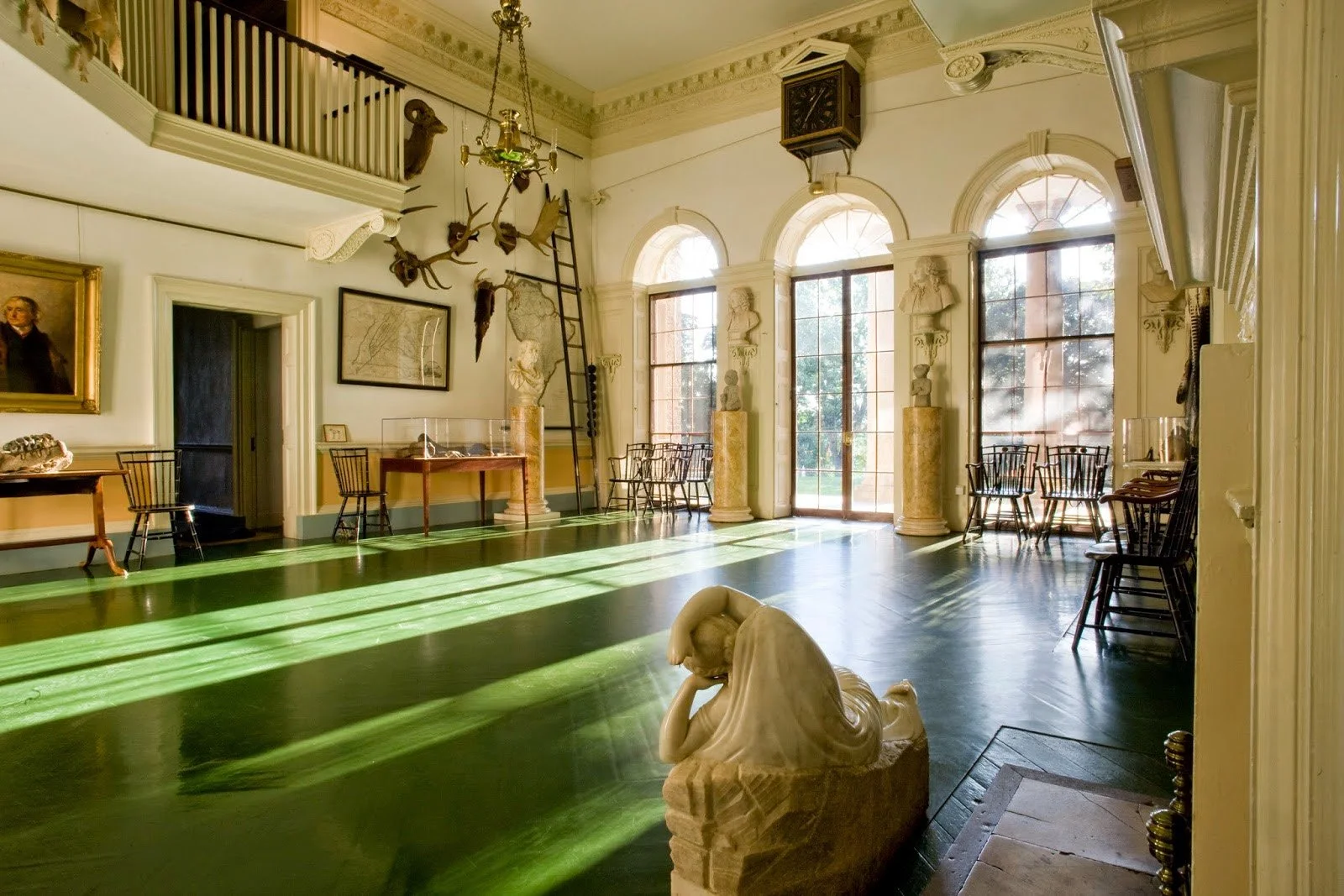
Much of Monticello's interior decoration reflects the personal ideas and ideals of Jefferson. The original main entrance is through the portico on the east front. The ceiling of this portico incorporates a wind plate connected to a weather vane, showing the direction of the wind. A large clock face on the external east-facing wall has only an hour hand since Jefferson thought this was accurate enough for those he enslaved.[23] The clock reflects the time shown on the "Great Clock", designed by Jefferson, in the entrance hall. The entrance hall contains recreations of items collected by Lewis and Clark on the cross-country expedition commissioned by Jefferson to explore the Louisiana Purchase. Jefferson had the floorcloth painted a "true grass green" upon the recommendation of artist Gilbert Stuart, so that Jefferson's "essay in architecture" could invite the spirit of the outdoors into the house.
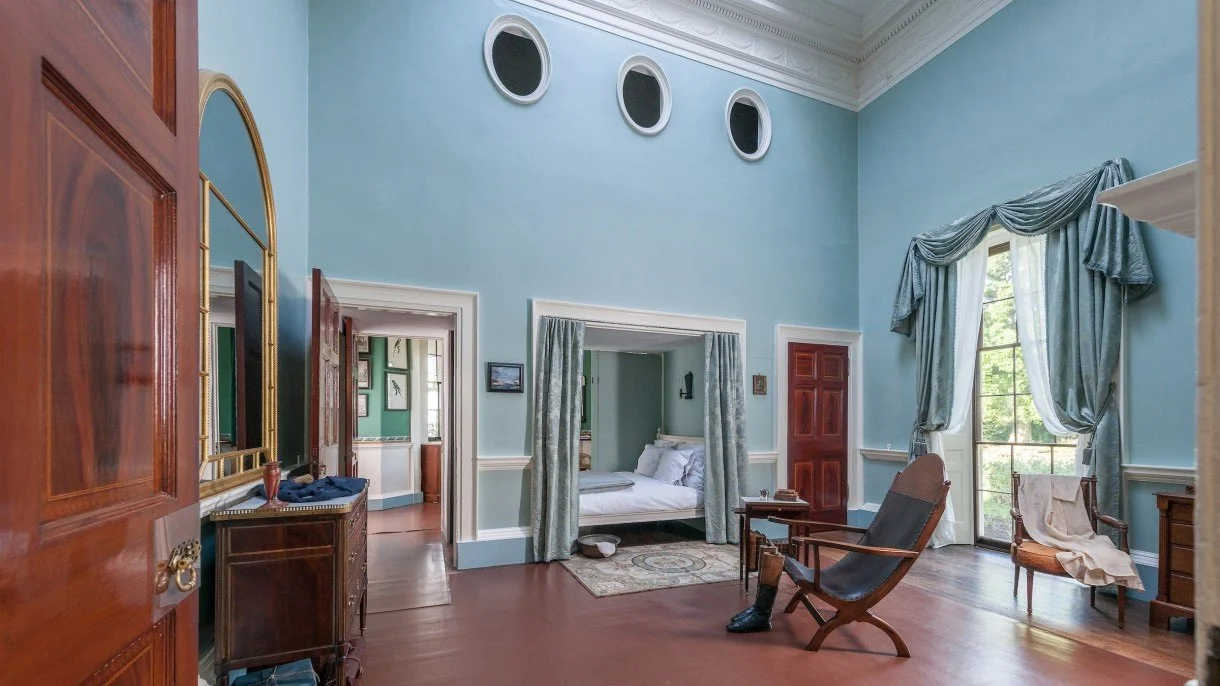
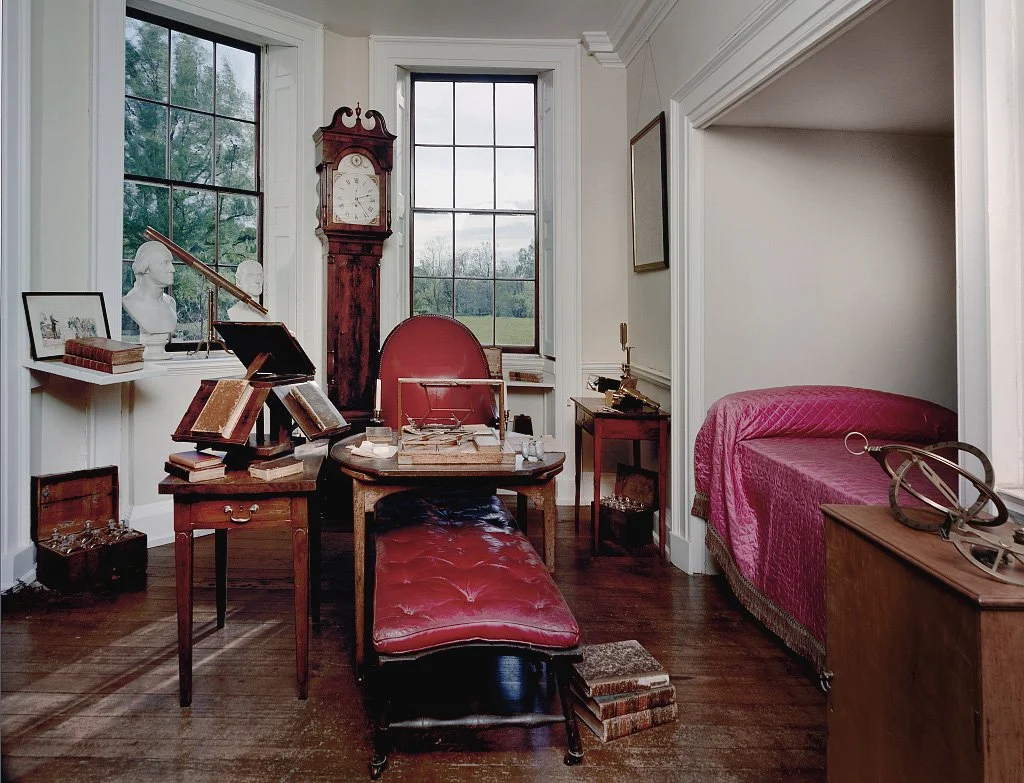
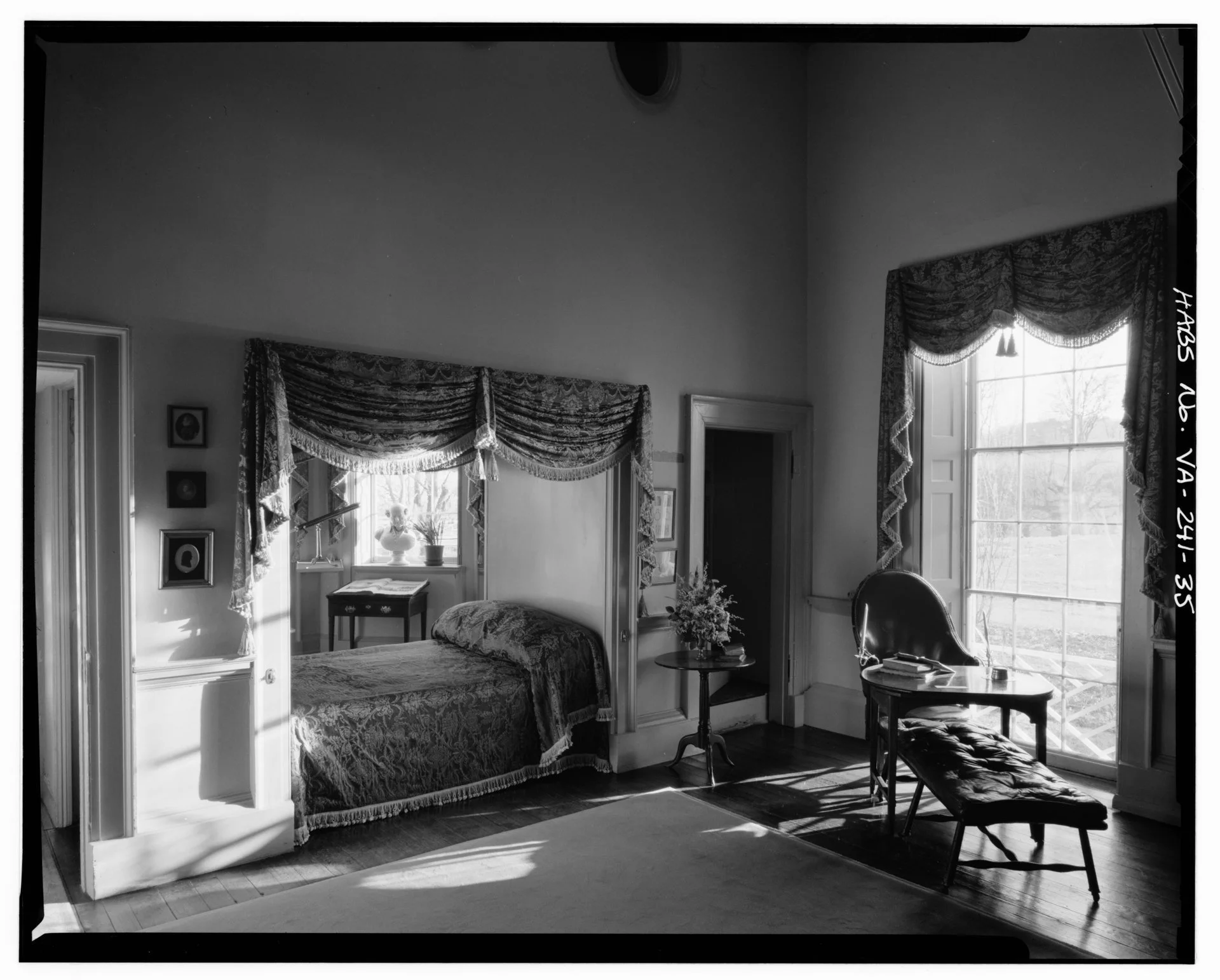
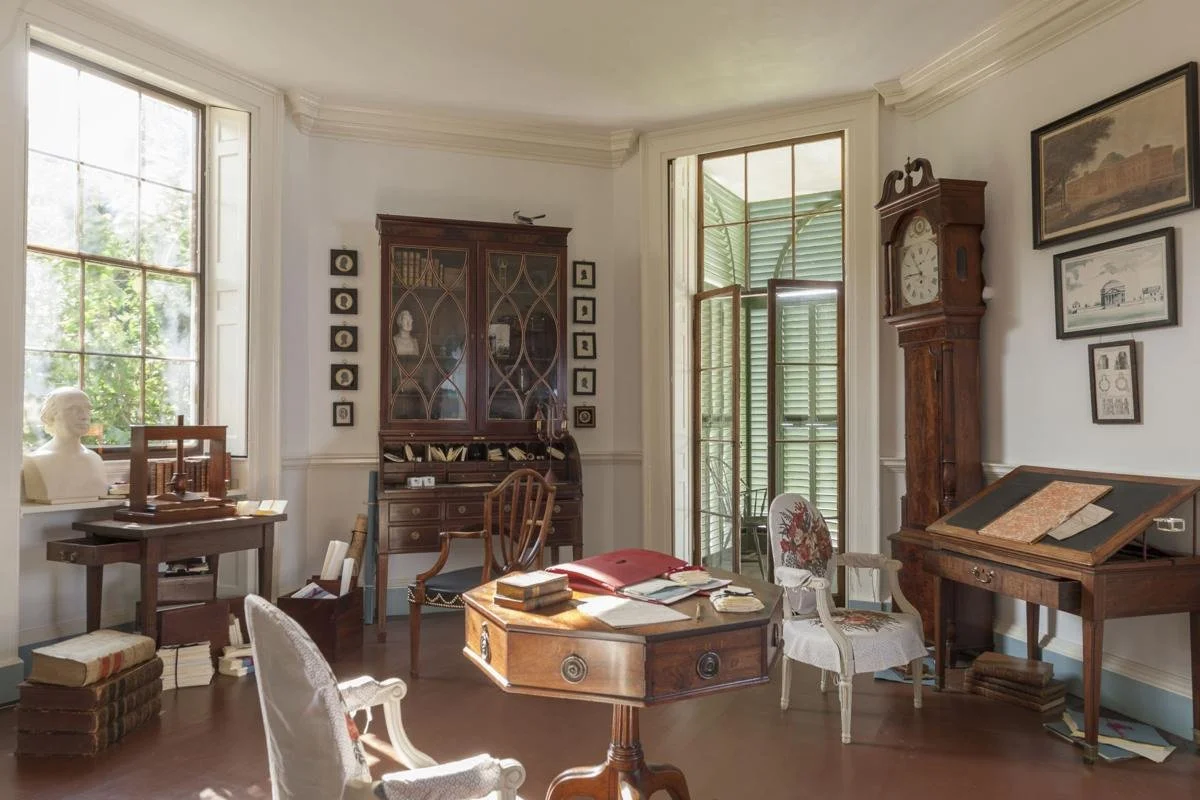
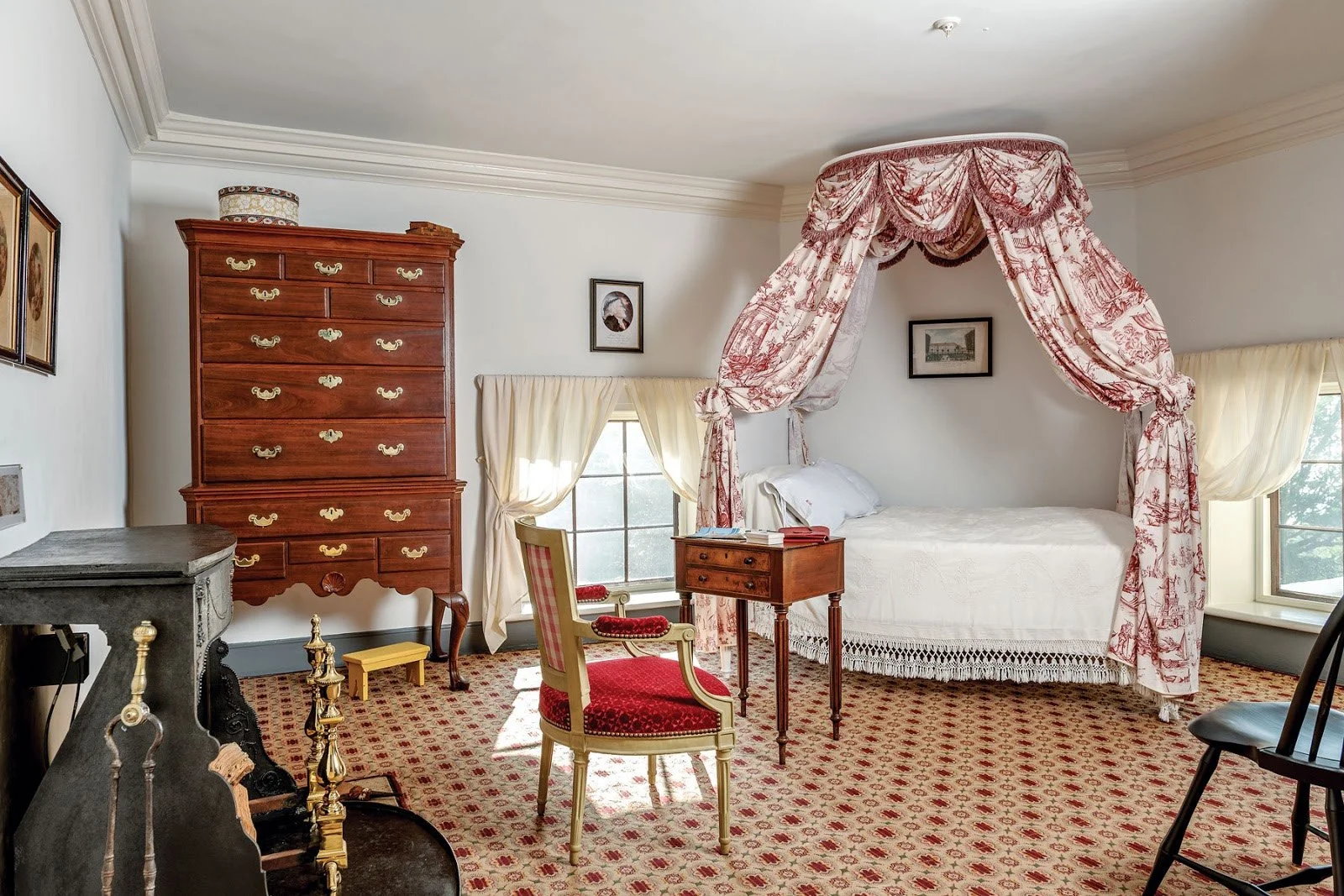
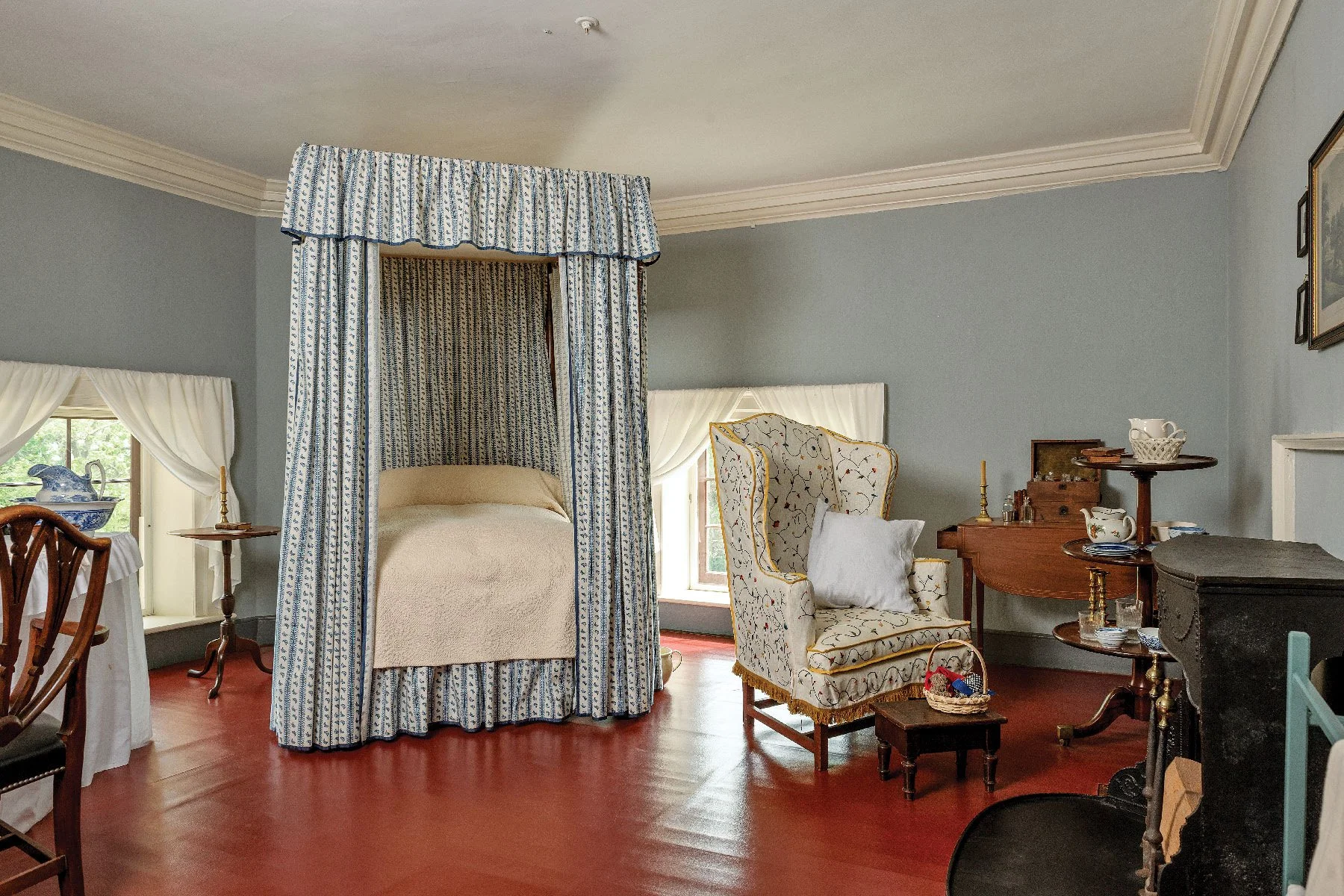
The south wing includes Jefferson's private suite of rooms. The library holds many books from his third library collection. His first library was burned in an accidental plantation fire, and he 'ceded' (or sold) his second library in 1815 to the United States Congress to replace the books lost in the 1814 burning of Washington during the War of 1812. This second library formed the nucleus of the Library of Congress. As "larger than life" as Monticello seems, the house has approximately 11,000 sq ft (1,000 m2) of living space. Jefferson considered much furniture to be a waste of space, so the dining room table was erected only at mealtimes, and beds were built into alcoves cut into thick walls that contain storage space. Jefferson's bed opens to two sides: to his cabinet (study) and to his bedroom (dressing room).
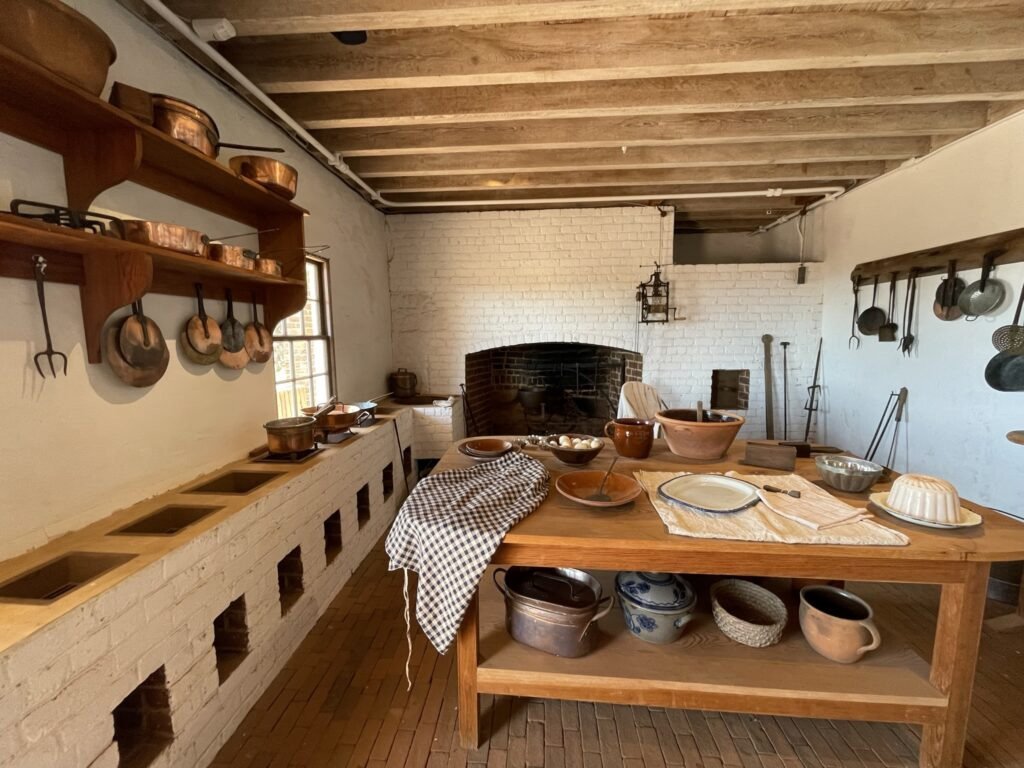
In 2017, a room identified as Sally Hemings' quarters at Monticello, adjacent to Jefferson's bedroom, was discovered in an archeological excavation. It will be restored and refurbished. This is part of the Mountaintop Project, which includes restorations in order to give a fuller account of the lives of both enslaved and free families at Monticello. The west front gives the impression of a villa of modest proportions, with a lower floor disguised in the hillside. The north wing includes two guest bedrooms and the dining room. It has a dumbwaiter incorporated into the fireplace, as well as dumbwaiters (shelved tables on casters) and a pivoting serving door with shelves.

Related Curated Collections: Traditional Contemporary

Living Room
Dining Room

Bedroom
Monticello
The copyright of photographs of inspiring places are held by the authors of the photographs or are within the public domain. By presenting these images, our intention is to showcase the extraordinary spaces that they capture, increase awareness of these homes, and encourage visitors to purchase tickets and visit them in-person. As is the case with the source of these images, they are offered free of charge and accessible to anyone who searches for the specific inspiring place. In order to streamline the virtual experience of these homes, we have not highlighted attribution. If you are the author of any photograph and would like specific attribution or us to create a link to the original photograph or your business or body of photographic work, please contact us at info@ourthings.io and we would be more than happy to accommodate your request. If you would not like your work to be featured, we would also be happy to remove the image. Images credits for this inspiring home include: N/A.
