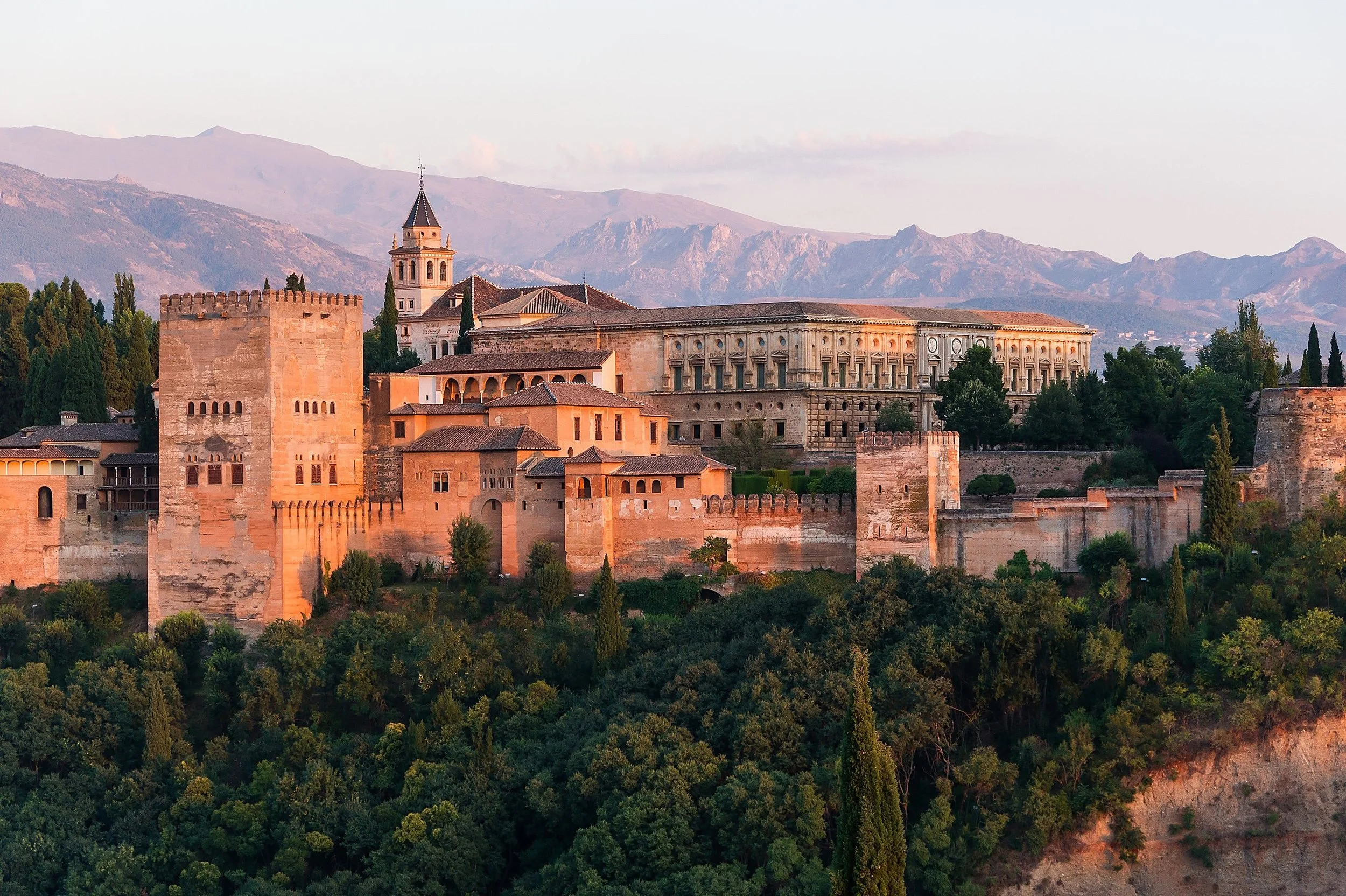

Islamic
Dates: 600s-present
Examples: Azerbaijani, Indo-Islamic, Indonesian, Moorish, Ottoman, Persian, Somali, Sudano-Sahelian, North African, Tatar, Swahili, and Yemeni
Description: Islamic architecture is an expansive and diverse tradition that spans centuries, regions, and cultures. Rooted in the early Muslim conquests of the 7th and 8th centuries, Islamic architecture initially absorbed elements from Roman, Byzantine, Iranian, and Mesopotamian architecture, adapting these influences to create a distinctive style. A defining feature of Islamic architecture is its use of intricate geometric patterns, which replaced figural iconography, reflecting a focus on the unity and perfection of the universe. These patterns were executed in various materials, such as stone, glazed tile, carved wood, and lattice screens, and became characteristic of Islamic design in both religious and domestic settings.
One of the key typologies in Islamic domestic architecture is the courtyard house, which emphasizes privacy and spatial delineation based on gender. Women could see into public areas through screens without being seen themselves. This courtyard model was widely adopted across regions, from Syria and Baghdad to Cairo, Morocco, and Algeria.
-
Palaces built during the Islamic Golden Age also embodied these principles, often featuring intricate courtyards, lush gardens, and decorative screens that demonstrated both Islamic ideals and local variations.
Climate adaptation and defense considerations are also prominent in traditional Islamic architecture. In the deserts and hot climates where many Islamic societies developed, buildings often used thick walls, high ceilings, and open courtyards to regulate temperatures, while shaded corridors and lattice screens protected inhabitants from harsh sun. These features later influenced the late Gothic architecture of Europe, particularly in Spain and Portugal, where Moorish civilization left a lasting architectural legacy.
Islamic architecture experienced significant shifts during the colonial era when European powers colonized many Islamic regions. In colonies throughout Asia and North Africa, traditional Islamic styles were often marginalized, while colonial centers introduced Western classical and Baroque influences. However, some regions, such as the Levant, retained relatively static Islamic architectural traditions due to their peripheral role in the colonial empires.
The discovery of oil in the Middle East and subsequent economic booms in the 20th century brought a resurgence of Islamic architecture in a modernized form. Initially, new construction in these oil-rich regions reflected a revivalist approach, drawing on traditional forms as symbols of cultural pride. Over time, however, this gave way to a hybridized style, where local leaders combined modern architectural approaches, such as the International Style, with traditional Islamic motifs. Major urban centers, including Dubai, Abu Dhabi, and Riyadh, began to reintroduce Islamic garden principles, geometric patterns, and courtyard-inspired designs in new administrative and public buildings. This approach represented both a connection to heritage and an embrace of modernity, symbolizing these nations’ aspirations to evolve beyond oil dependency and establish themselves as hubs for finance, technology, and culture on the global stage.
Today, Islamic architecture reflects a dialogue between ancient traditions and contemporary design, showing a unique adaptability and resonance that continues to influence global architecture.