
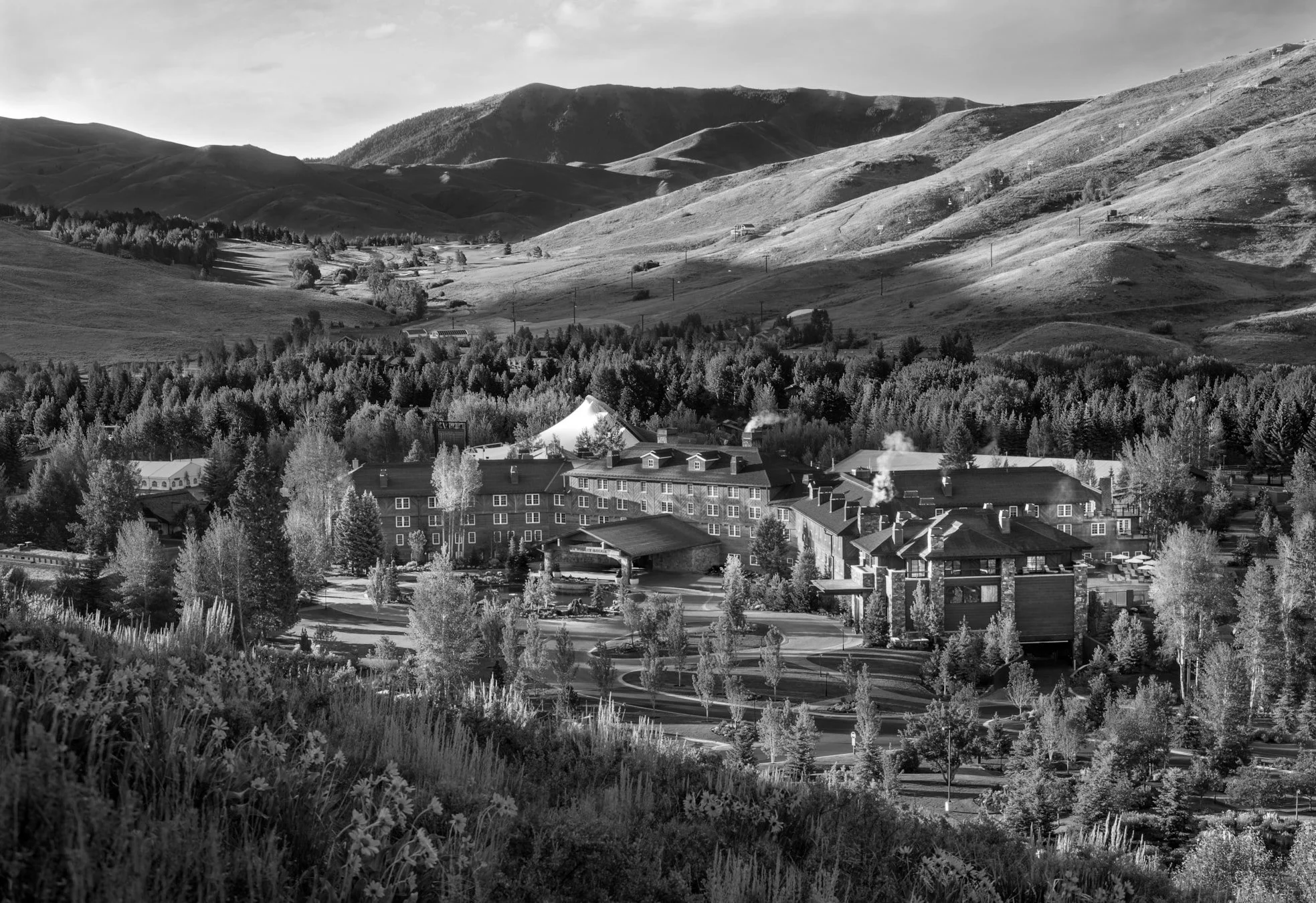

How Wealth and Power Make Place
Wealth has always played an instrumental role in creating the physical places in which we live and gather. Wealthy individuals and families often fund these places to serve their community and enhance their image. If one examines the evolution of cities throughout history, it is easy to see how these efforts have shaped the urban landscape and provided room for both significant architectural achievements as well as events, gatherings, and movements. In many cases, these places have outlived their initial patrons and come to anchor a broader community of wealthy individuals, businesses, and families. Sometimes this occurs with a focus on a particular trade while in others it might be tied to a particular class or ethnicity. In the 19th and 20th century American City, many of these efforts were tied to the booming industrial revolution. Places like Central Park anchored a part of the city that demanded a focal point and identity. At the same time, towns like Pullman and Gary, IN grew around vast manufacturing factories. Ultimately, the effect is to tie the health and future of an area to a broader power structure that in turn reflects vast networks that make the production that occurs possible and that sustains those involved.
Just as power is able to make a place, it can also destroy it. This can occur through extraction of material resources, violence during war, policies that drive famine, and policies that exclude or disempower people. The consequence is often the removal of access to resources that are required to sustain vibrant communities. In many cases, it occurs for the benefit of broader power structures that are engaged in placemaking elsewhere for a group of very different individuals and families. The result is a highly stratified world where an increasing number of people are confined to non-places that are subject to surveillance and control. Many of these non-places are defined by deplorable living conditions and limited access to resources to register or improve these conditions.
These trends continue as we move further into the Digital Age. The digital economy has both challenged a wide range of historic places as well as created a range of non-places such as server farms and distribution centers. At the same time, the vast wealth that this economy has generated has fueled rising housing prices in places near corporate headquarters and helped to fund an elite sphere of luxury bars, restaurants, vacations homes, yachts, and parties. In many cases, the pursuit of this digital technology has come at the cost of physical experience. It has degraded connections, enhanced the capacity for profiling and surveillance, destroyed small local businesses, and placed huge pressure across the economy to figure out how to pay for these ubiquitous and increasingly necessary services amidst increasingly small profit margins. In this sense, many of these digital services are extracting a huge amount of wealth from the businesses that once sustained place while often failing to return this value back to the physical via enhanced efficiency, productivity, and visibility. In this line of research, we explore how the current manifestation of wealth–much of which is tied to the digital–is making or unmaking place and how it might do so in a way that is less extractive and more collaborative–ultimately with the goal of promoting greater balance between the physical and digital.
Research and White Papers
-
The visual art practice of Founding Partner, Walker Thisted, has often focused on the relationship between power and place. In particular, the work is concerned with how 19th and 20th Century industrialization and urbanization under the propulsion of what some might call “the golden age of capitalism” has left various traces within the current context of Late Capitalism. It focuses on the effects of deindustrialization on the city (Chicago in particular), the ways in which sections of the city have been subject to trauma that has transformed their appearance and functionality, and the inequality that one witnesses when navigating the contemporary city. At the same time, it explores the sources of material wealth and how this propels culture, community, and inequality while also examining how this material is transformed to become the texture of the built environment that we inhabit daily. In the process, it explores ways in which my own personal archive of images and objects intersects global archives that trace the formation of the broader world that we collectively inhabit in diverse manners. The following are a few series that highlight these efforts:
034_03_942-1005: Portraits of Corporations and Their Disasters
034_03_932-941: Portraits of Corporations and Their Disasters
032_01_911: Madison St., Chicago, from origin at Millennium Park to Pulaski Rd.
029_01_792-894: A series of vacant and occupied sites on the South Side of Chicago
029_02_787-791: A series of vacant and occupied sites on the South Side of Chicago
015_09_670-675: East Garfield Park and Near West Side of Chicago
015_01_578-669: East Garfield Park and Near West Side of Chicago
011_01_341-362: Sutter's Mill and the mansion Filoli in Woodside, CA
010_01_289-340: location of the former Hawthorne Works Western Electric Plant
005_05_082-094: a trip between St. John, USVI and Chicago, IL
-
The industrial age left behind a powerful model for understanding how wealth creates, sustains, and sometimes abandons place. Factory towns once represented the apex of industrial organization—a fusion of labor, production, and paternalistic control, often built and maintained by a single company or family. While many of these towns fell into decline with deindustrialization, their logic persists in new forms.
Today’s “factory towns” are defined less by manufacturing and more by logistics, data, and fulfillment. They include the vast complexes of warehouses, ports, and distribution centers that sustain the global digital economy. Though the means of production have shifted, the social consequences remain similar: concentrated wealth, extractive labor systems, and communities bound to fragile economic ecosystems. This paper explores how the model of the factory town has evolved in the 21st century—where ownership, labor, and geography intersect in new and unequal ways—and how this model might be reimagined to restore balance between the creation of wealth and the sustenance of community.
-
Throughout history, the wealthy have built distinct physical worlds for themselves—districts, enclaves, resorts, and institutions that both reflect and reinforce their social position. These places, from Mayfair to Malibu, Dubai to the Hamptons, form a global archipelago of elite belonging. In the 21st century, this geography has expanded and accelerated, fueled by private jets, digital networks, and a culture of mobility that allows wealth to exist everywhere and nowhere at once.
This paper examines how these “places of the global elite” function not only as spaces of leisure and consumption but also as powerful mechanisms of exclusion and influence. Their architecture, services, and rituals serve to concentrate both capital and cultural power. At the same time, their presence distorts surrounding economies, inflates housing markets, and shapes patterns of urban and regional development. By analyzing the infrastructure, symbolism, and social logic of these spaces, the paper asks how such concentrated wealth might be reconnected to the broader civic and cultural fabric—and whether the idea of elite place can evolve toward stewardship rather than isolation.
-
The digital economy has generated a new typology of space—anonymous, utilitarian, and almost entirely devoid of public life. These “non-places” include data centers, logistics hubs, gig-worker housing, and vast landscapes of distribution and consumption that operate beyond the traditional rhythms of the city. They are the physical shadow of digital convenience: unseen yet essential, optimized yet alienating.
This paper investigates how these non-places embody the hidden architecture of the digital age and what they reveal about contemporary values. While they promise efficiency and speed, they often extract vitality from communities, concentrate environmental burden, and erode spatial identity. By tracing their rise, this study asks how digital-era infrastructure might be reimagined to contribute to, rather than hollow out, the social and cultural life of place. Can the architecture of data, logistics, and automation coexist with the need for meaning, belonging, and locality?
-
In the pursuit of digital innovation, societies have often undervalued the physical environments that ground culture, community, and well-being. The more the digital economy expands, the more it seems to displace the physical—extracting wealth from the tangible world while offering only fragmented forms of connection in return. This dynamic has reshaped how we live, gather, and sustain our surroundings, replacing local interactions and ownership with algorithmic coordination and remote control.
This paper explores how the prioritization of digital growth has contributed to the decline of physical place—economically, socially, and emotionally. It examines how digital infrastructures drain local value, concentrate profits elsewhere, and transform human experience into data. Yet it also seeks pathways toward reintegration: how digital tools might be used to reinforce rather than replace place, to create more balanced systems that value the physical as a site of care, culture, and continuity. Ultimately, the paper argues for a recalibration of priorities that restores reciprocity between the physical and digital worlds, ensuring that innovation serves the places and people from which it draws strength.
-
Infrastructure is often mistaken for neutral ground — the invisible systems of pipes, roads, power lines, and networks that quietly sustain modern life. Yet throughout history, these systems have reflected deliberate choices about who and what is served. From railways that enabled industrial expansion to fiber networks that concentrate digital power in global hubs, infrastructure has always carried the imprint of wealth and control. This white paper explores how infrastructural design and investment decisions shape economies, geographies, and identities. It asks how these systems—both physical and digital—might evolve toward more equitable distribution, and how visibility into their structure could become a tool for democratic accountability rather than corporate consolidation.
-
The spaces where we gather reveal the moral and economic foundations of an era. Once, temples and churches embodied the spiritual and aesthetic ambitions of communities; later, civic buildings expressed the ideals of democracy and progress. Today, corporate campuses, branded museums, and private clubs increasingly dominate the landscape of public life, blurring the boundary between collective experience and consumer culture. This white paper investigates how architecture has long been used to define what “public” means—and who belongs within it. It considers the aesthetic strategies, funding models, and symbolic languages through which institutions cultivate legitimacy, asking what forms of public architecture could reassert shared values in an age of privatized experience.
-
The creation of wealth has always involved the extraction of value—from land, labor, and culture alike. This paper examines how processes of wealth accumulation reshape communities through displacement, environmental degradation, and cultural erasure. From the forced relocations that accompanied industrial expansion to the gentrification cycles of today’s cities, the pattern persists: as capital flows in, long-standing communities are pushed out. The paper also explores how new forms of extraction—data harvesting, short-term rental economies, and speculative real estate—extend this logic into the digital and financial realms. It argues that understanding these forces as interconnected systems of extraction is crucial for designing policies and technologies that restore agency and continuity to those displaced.
-
Amid the erosion of local identity and the dominance of digital abstraction, new movements are emerging to re-anchor wealth in place. This white paper surveys these efforts—from community land trusts and cooperative ownership models to regenerative design practices and local production networks. It considers how emerging technologies, including spatial intelligence and distributed ledgers, might be used to enhance transparency, empower stewardship, and restore long-term value to the physical world. The goal is not to reject the digital, but to redirect its capabilities toward sustaining physical life—enabling wealth to circulate through communities, preserve heritage, and regenerate the material foundations on which culture depends.

Call to Action
The relationship between wealth and the places we inhabit is at a turning point. For centuries, wealth has shaped the physical world—building cities, institutions, and cultural centers that defined eras and identities. Today, much of that power has drifted into the digital, leaving behind fractured landscapes, displaced communities, and eroding local economies.
This series of white papers invites collaboration from architects, urbanists, economists, technologists, sociologists, and cultural historians who recognize the urgency of restoring balance between the physical and the digital. We seek data, case studies, and critical perspectives that reveal how wealth continues to make—and unmake—place across industries and geographies.
Together, we can uncover the hidden infrastructures of influence, reimagine the architecture of public life, and chart a path toward a more regenerative economy of the physical—one where the production and preservation of place once again serve collective well-being rather than extraction and isolation.